
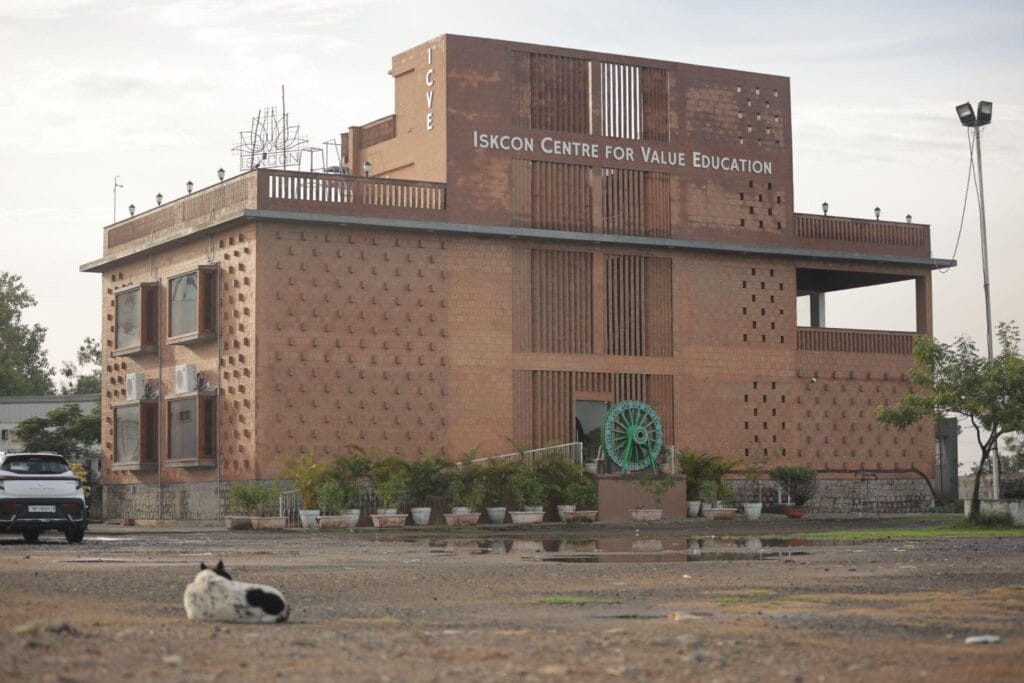
Designing the ISKCON Centre for Value Education was like shaping clay on a potter’s wheel – fitting, perhaps, for a building made of earth. Like clay that transforms under the maker’s hands, this mud block structure took form through continuous negotiation between vision and circumstance, between what was imagined and what the site insisted upon, between holding firm and yielding in turn. Anchored in materiality and philosophy, the building gradually took form, shaped and reshaped by the many hands that brought it to life. What we wish to share is this journey – one that opened up new ways of seeing, making, and experiencing space.
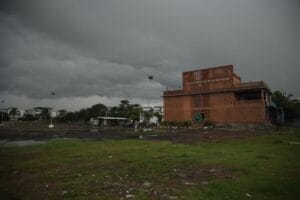
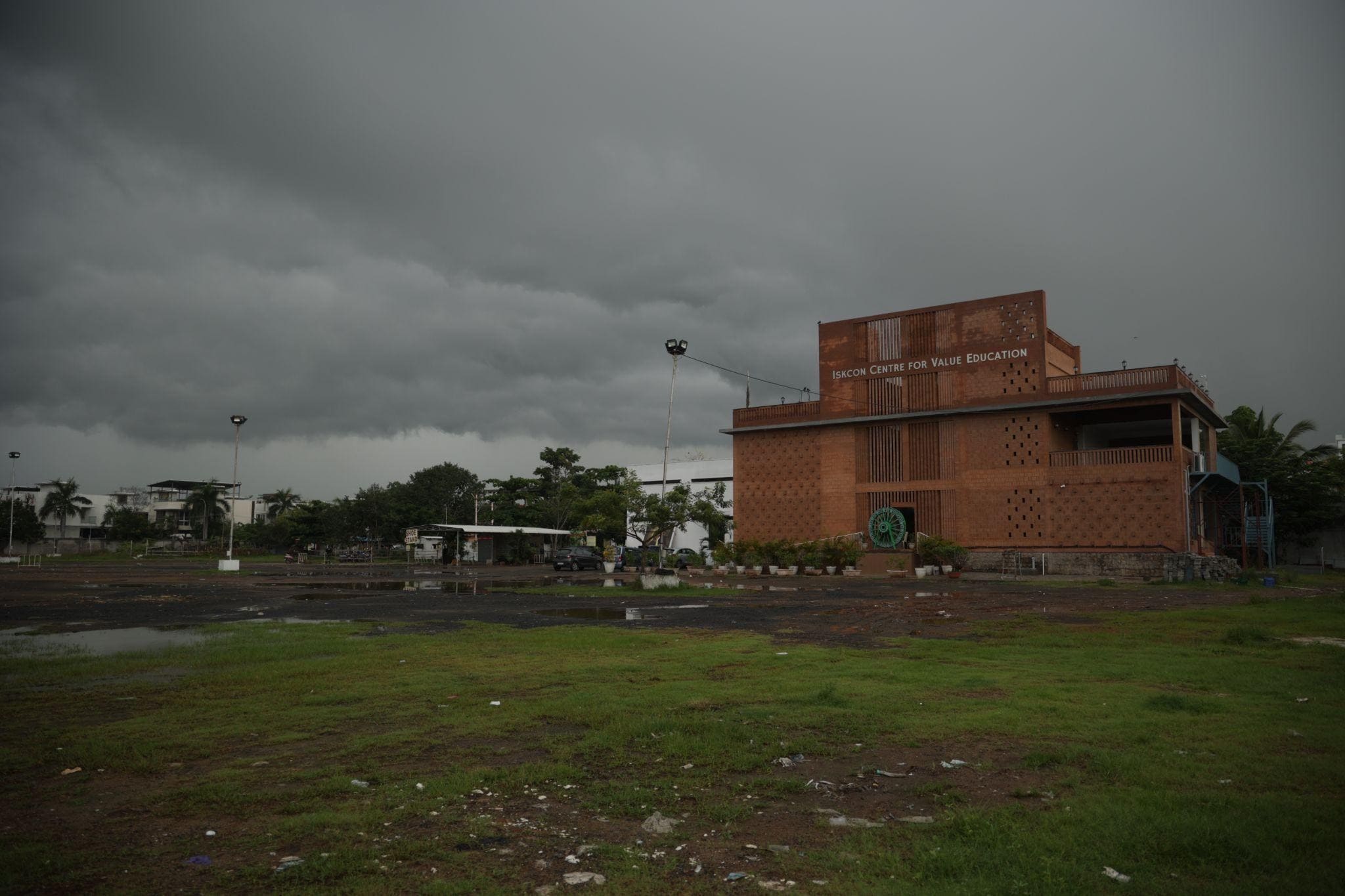
From the very beginning, participation and materiality shaped the process. The building was imagined as something grounded and unobtrusive — a quiet backdrop that would support, rather than overshadow, the teaching and learning of Vedic studies. Its earthy, monochromatic palette ties it to the soil, and its subdued presence sits comfortably beside the temple’s grandeur. Decisions were made on site, and each challenge became a chance to rethink and adjust. Over time, the project became a collective effort, with devotees, artisans, engineers, and designers working together — titles fading, intentions aligning.
The Meeting of Sun, Earth, Wind, and Sky
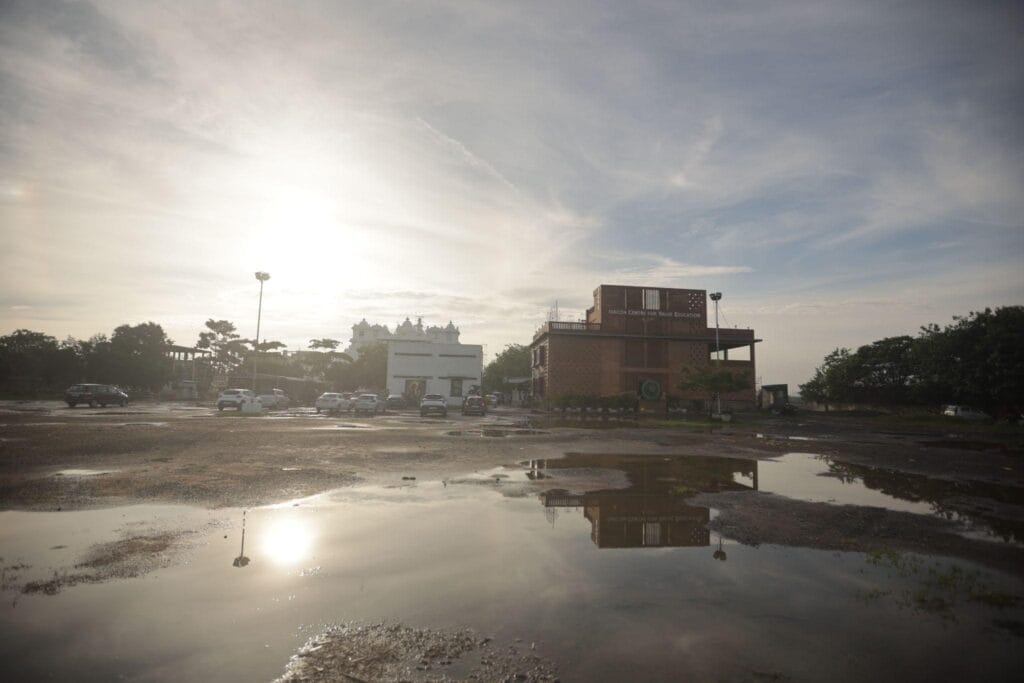
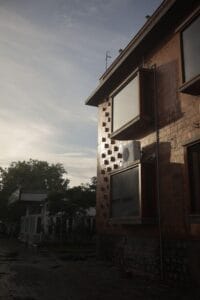
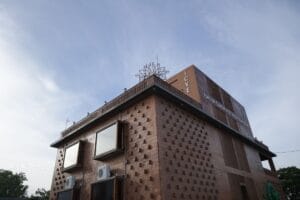
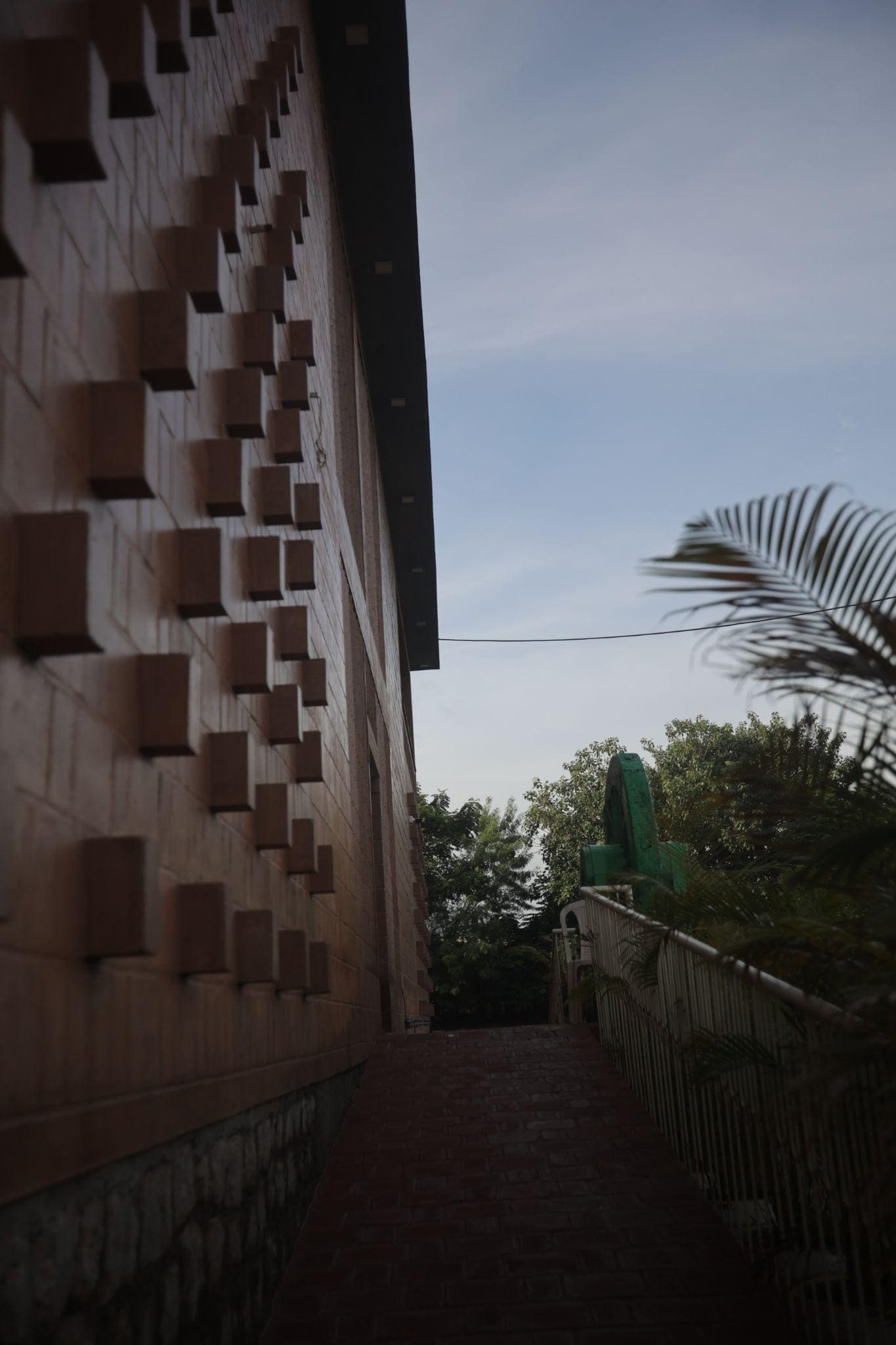
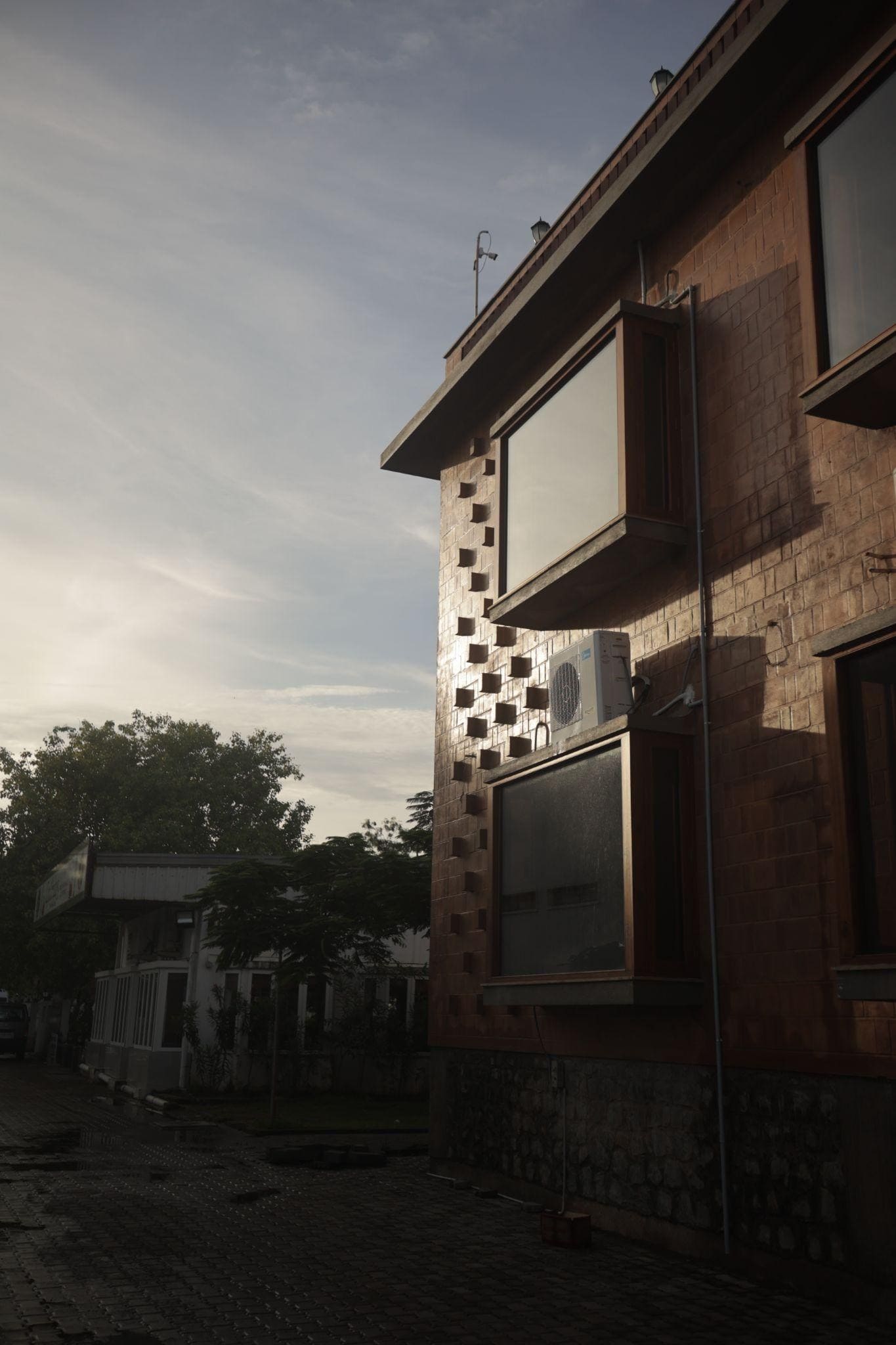
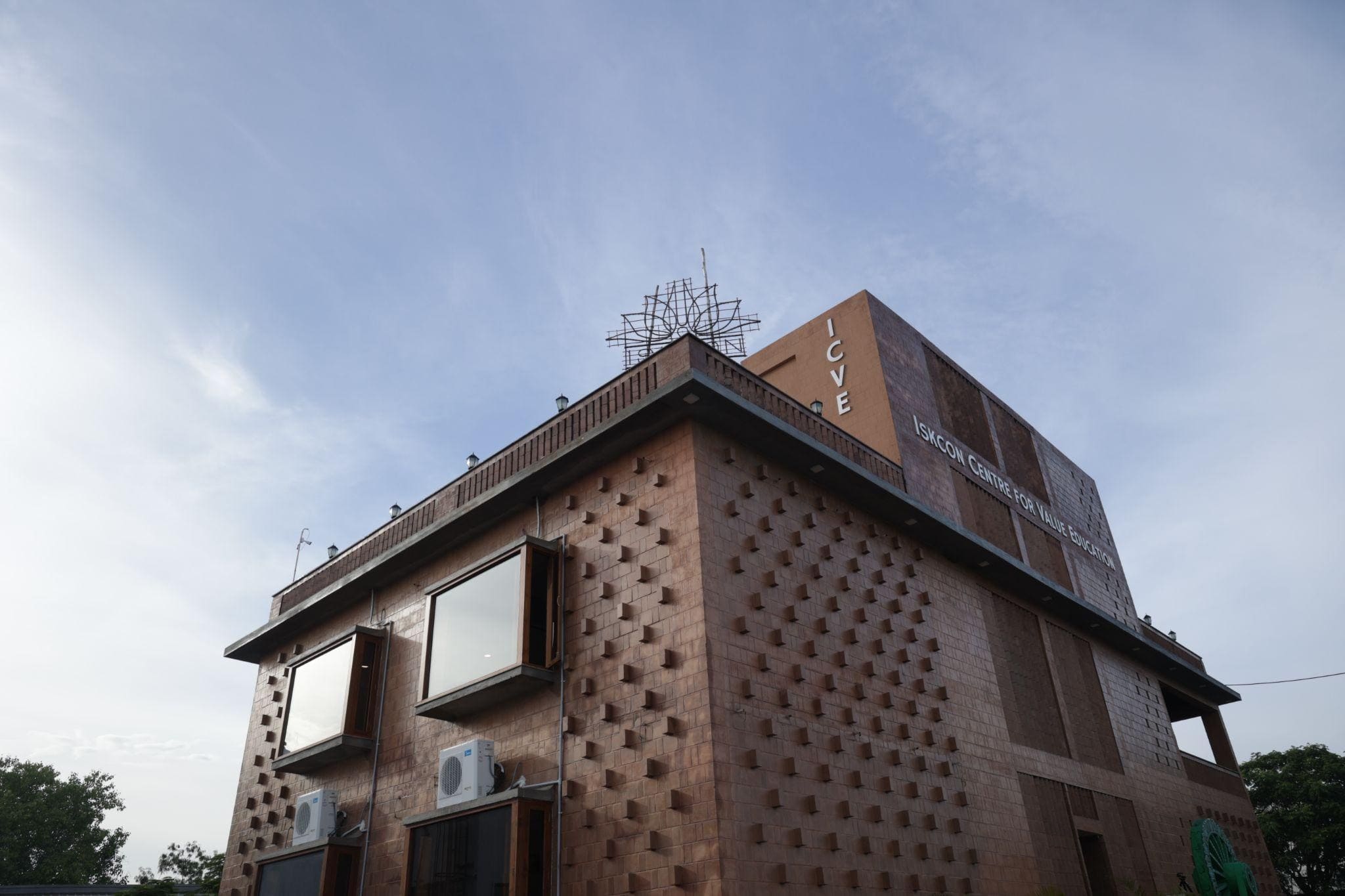
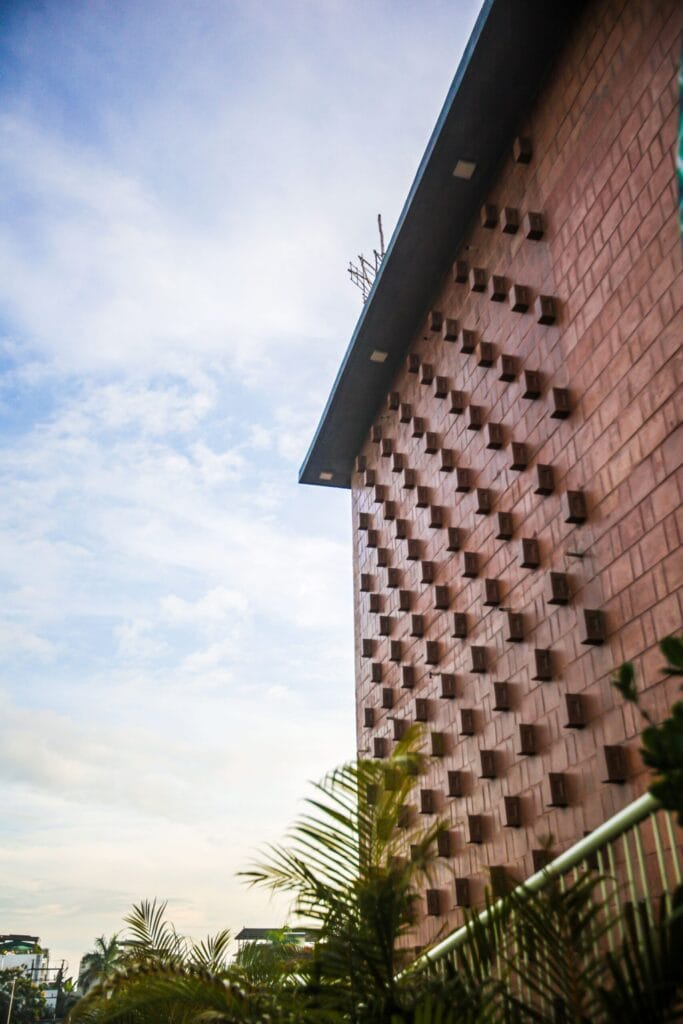
The building is not approached directly, but discovered. You meander around it as its layers gradually reveal themselves. Sunlight grazes the earthen surfaces, creating a play of light and shadow through projections and perforations. The material casts shadows upon itself, a dialogue of positive and negative forms. These shifting patterns change through the day, with every hour, every step, every gaze – no two perceptions ever the same.
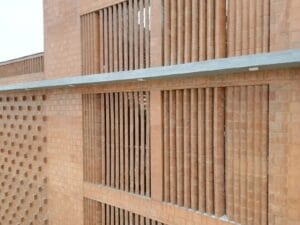
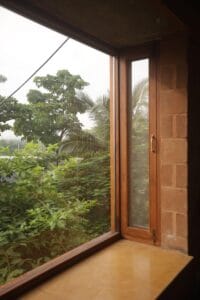
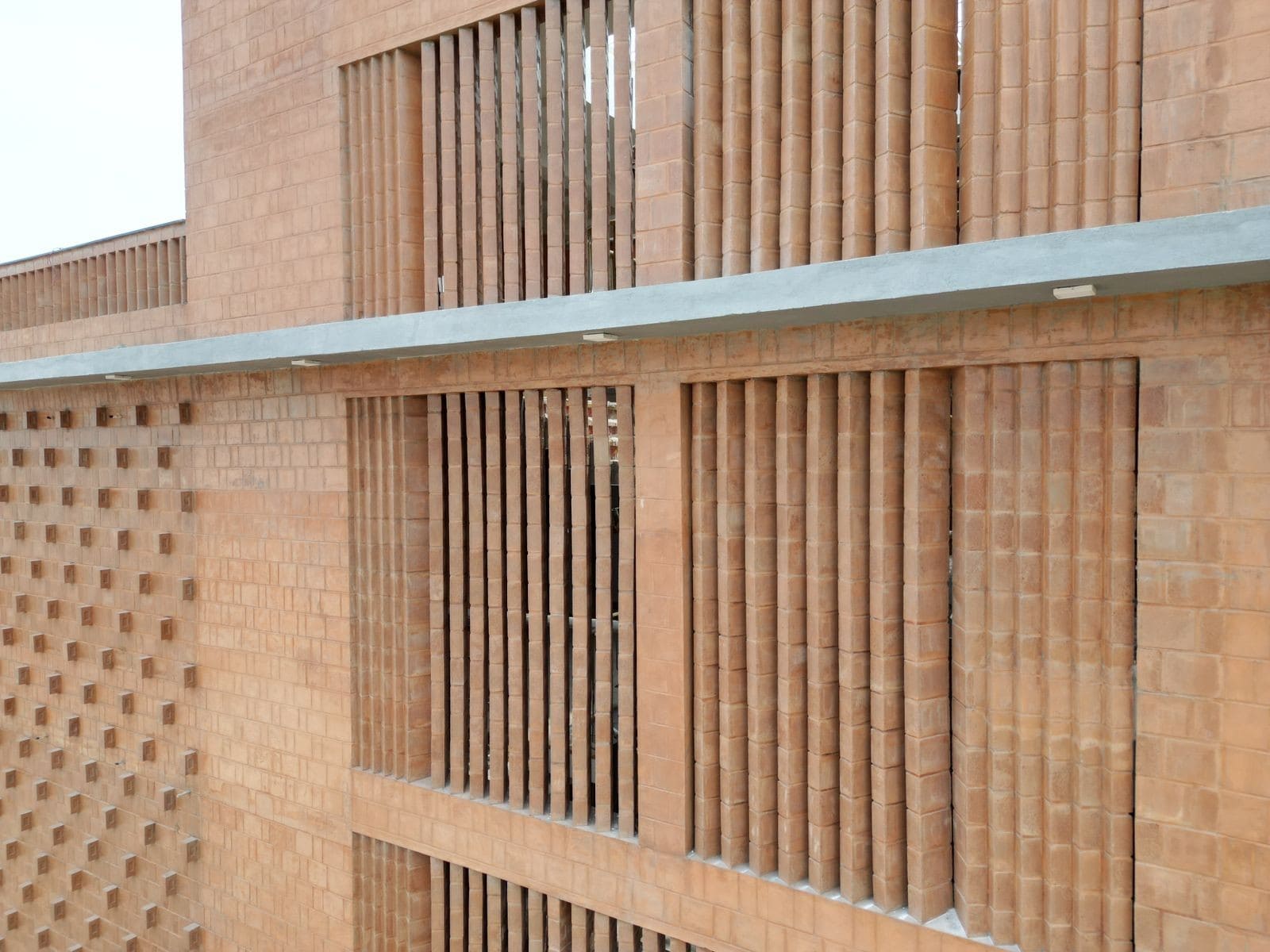
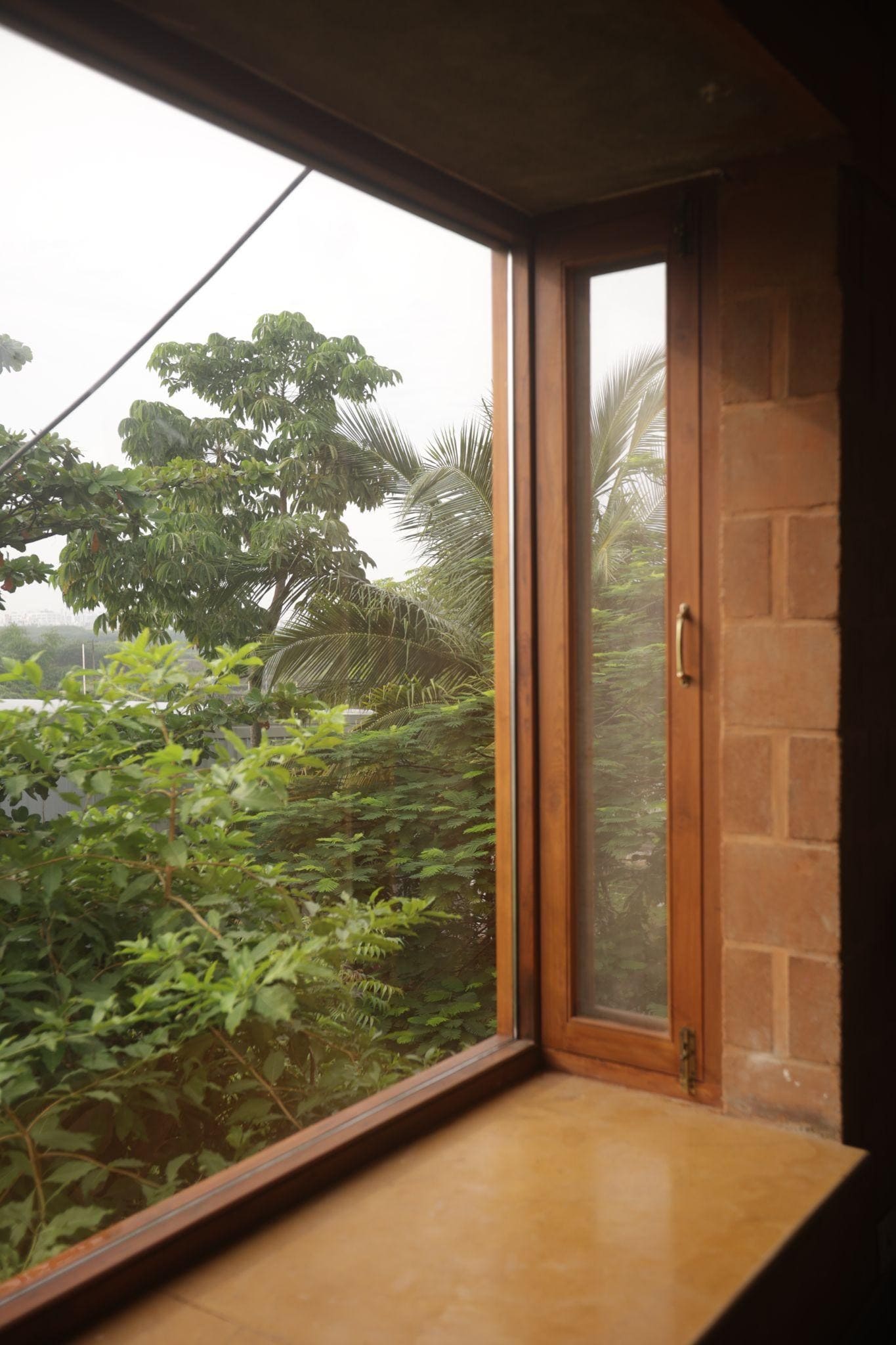
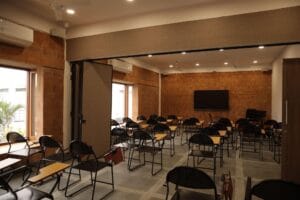
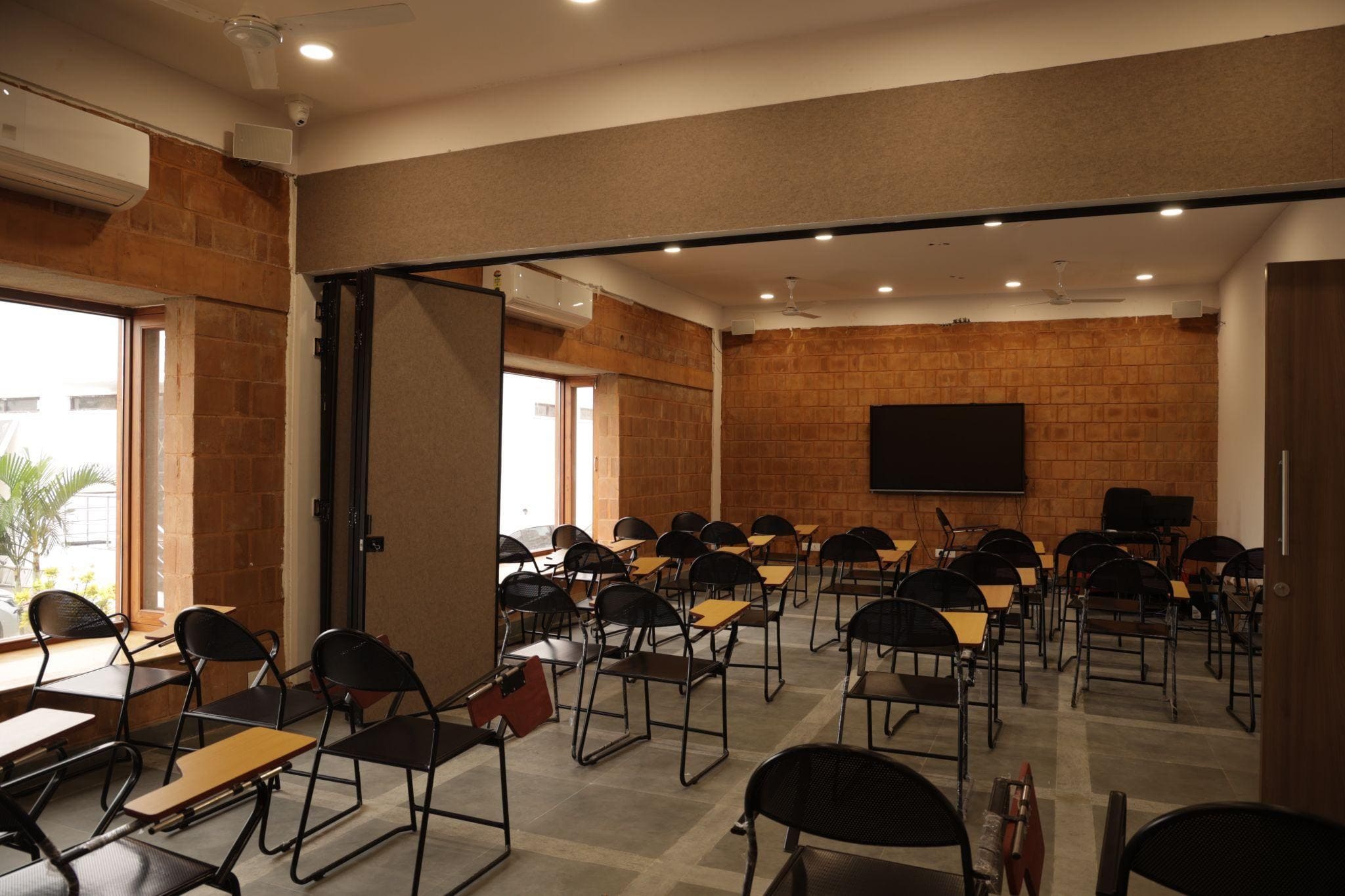
The palette of natural materials was chosen to mirror the groundedness the Centre wished to impart through value education. Climate responsiveness was embedded into the design with the use of compressed stabilised earth blocks (CSEB), mud plaster, Kota and Jaisalmer stone – materials that lend the structure both texture and thermal comfort. The pleated frontage, woven with vertical earth block fins, draws in the cool eastern sea breeze, letting it drift through the interiors before rising softly through the central courtyard in a gentle stack effect. Smaller passive strategies were devised to optimize performance: bay windows in classrooms with side openings and fixed glass fronts balance acoustic comfort with ventilation while doubling as seating nooks where children gather, adding warmth and liveliness to the learning spaces. In these convergences – between material and climate, between function and inhabitation – the building becomes a framework for everyday life.
The Making
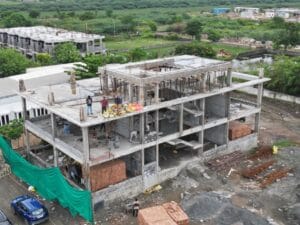
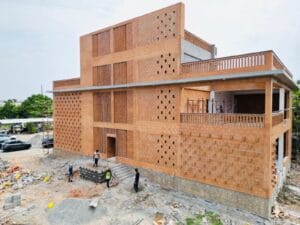
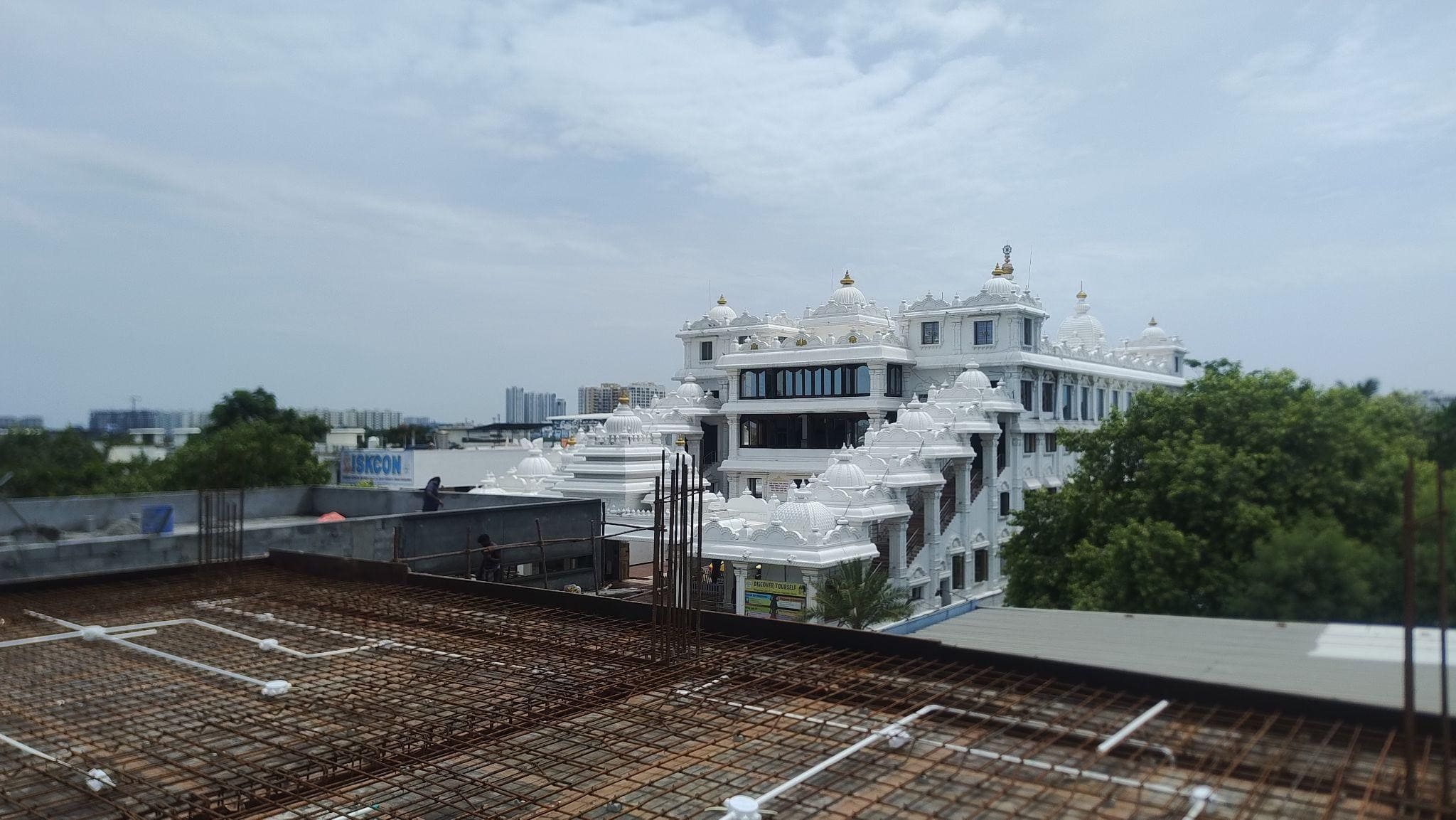
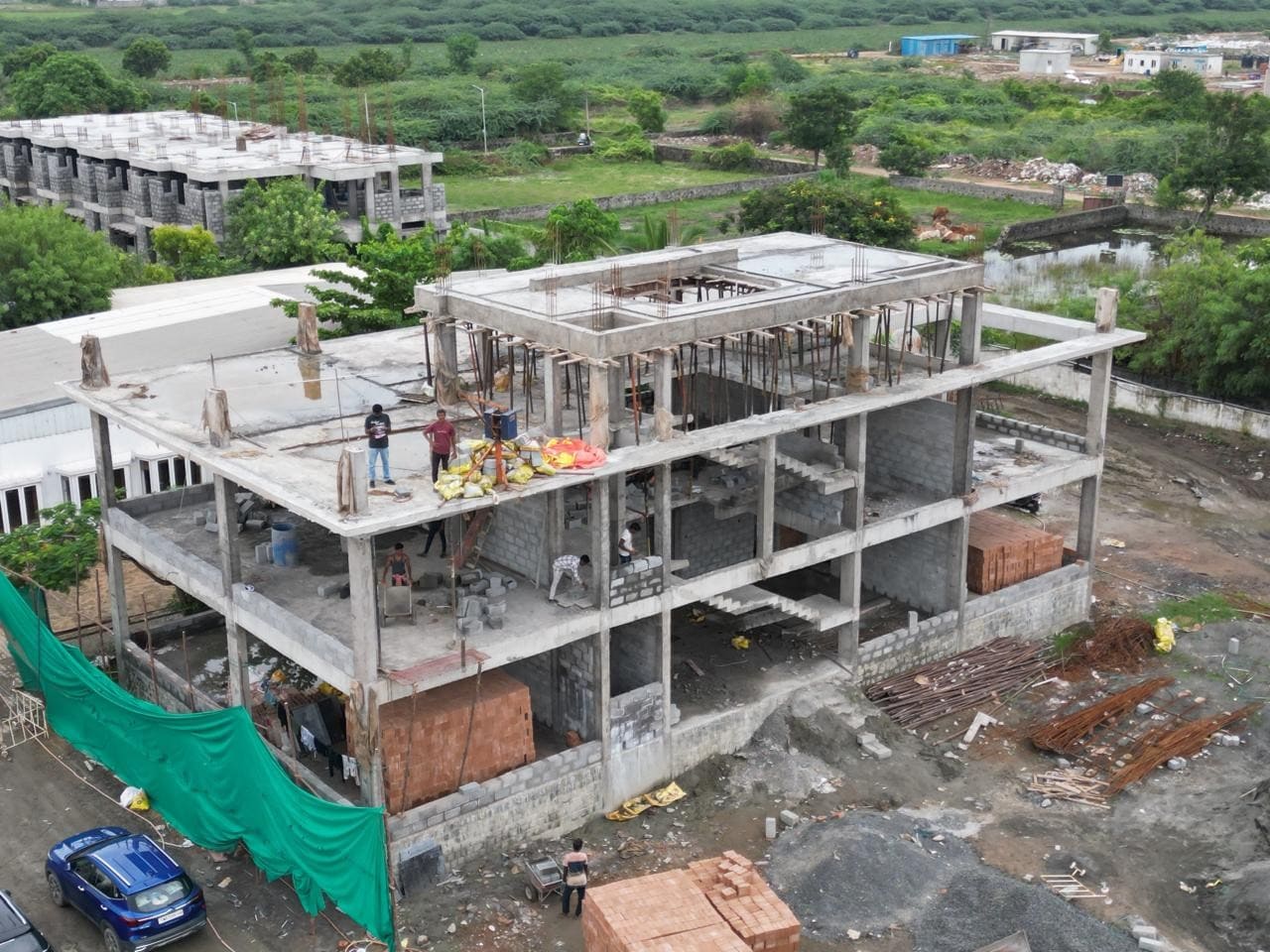
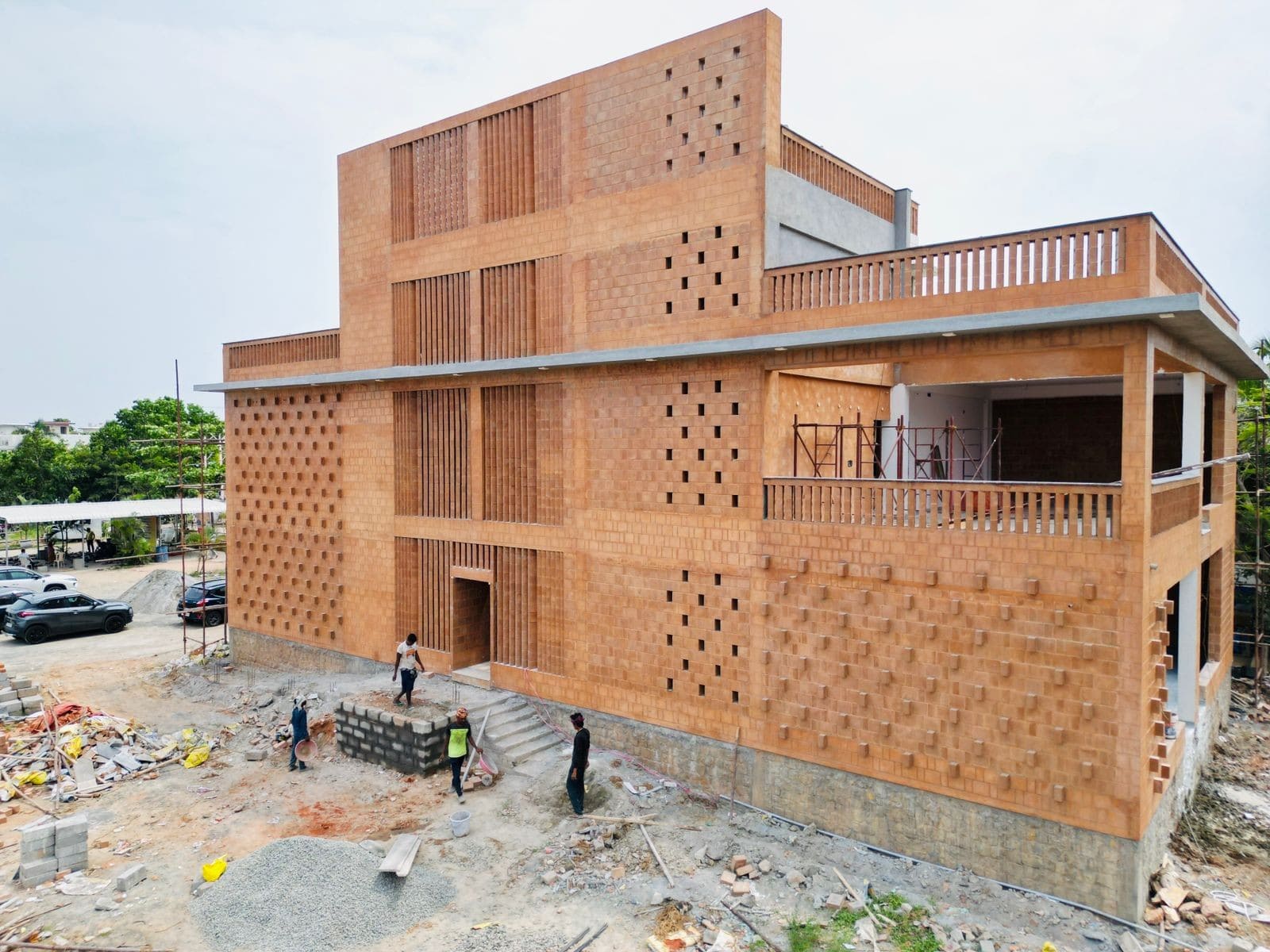
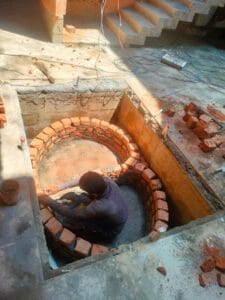
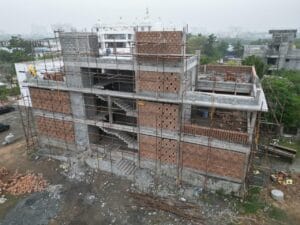
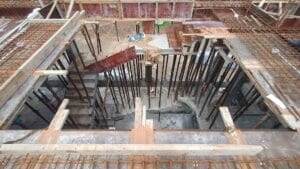
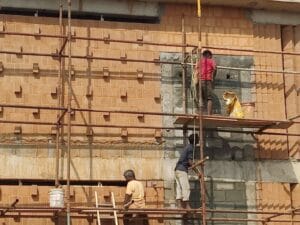
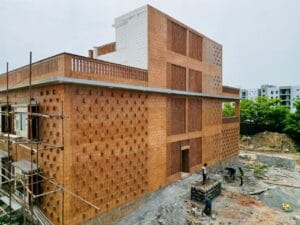
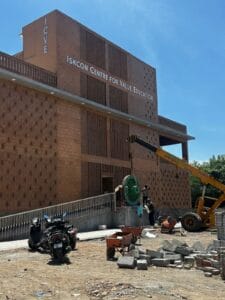
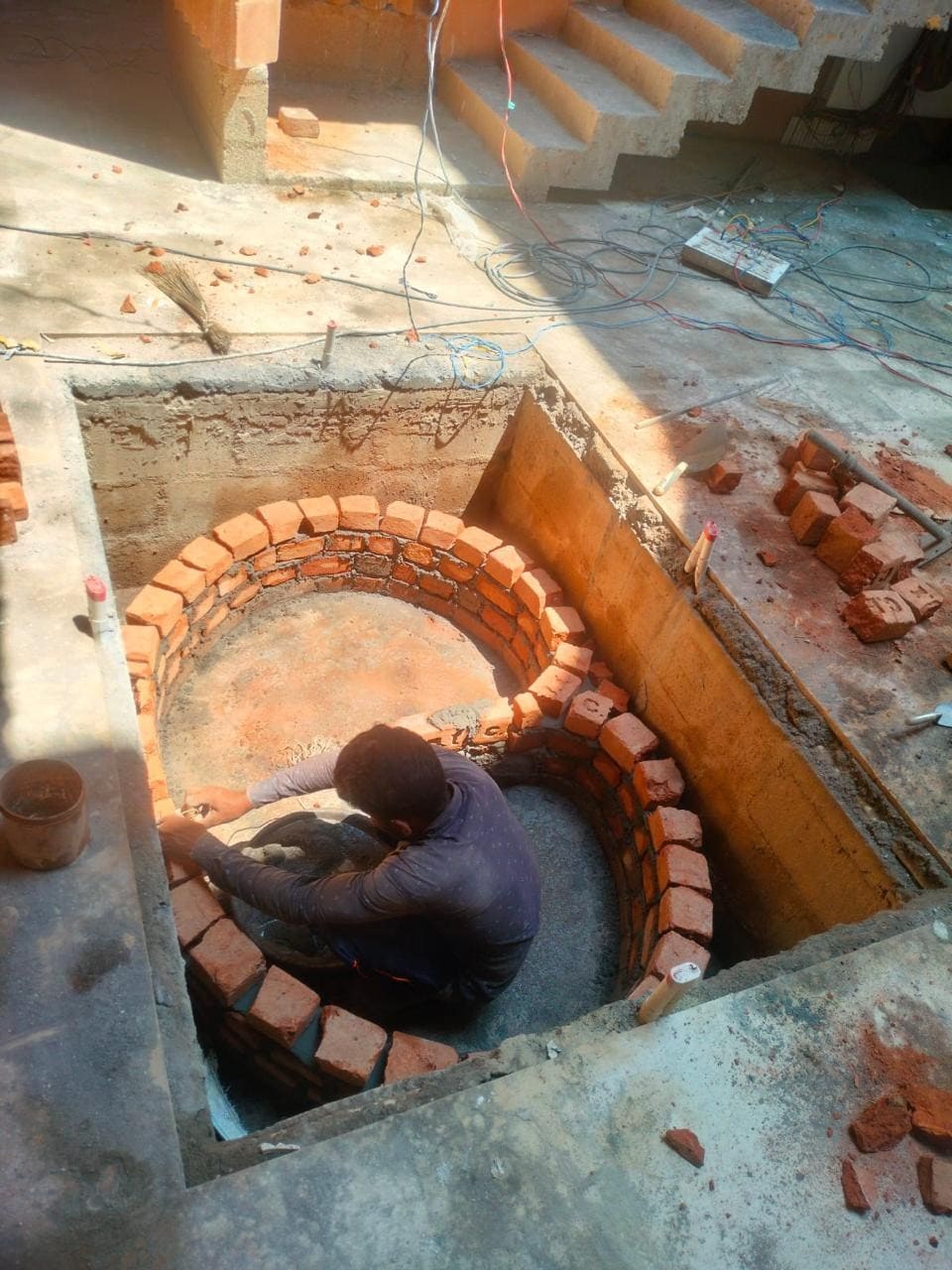
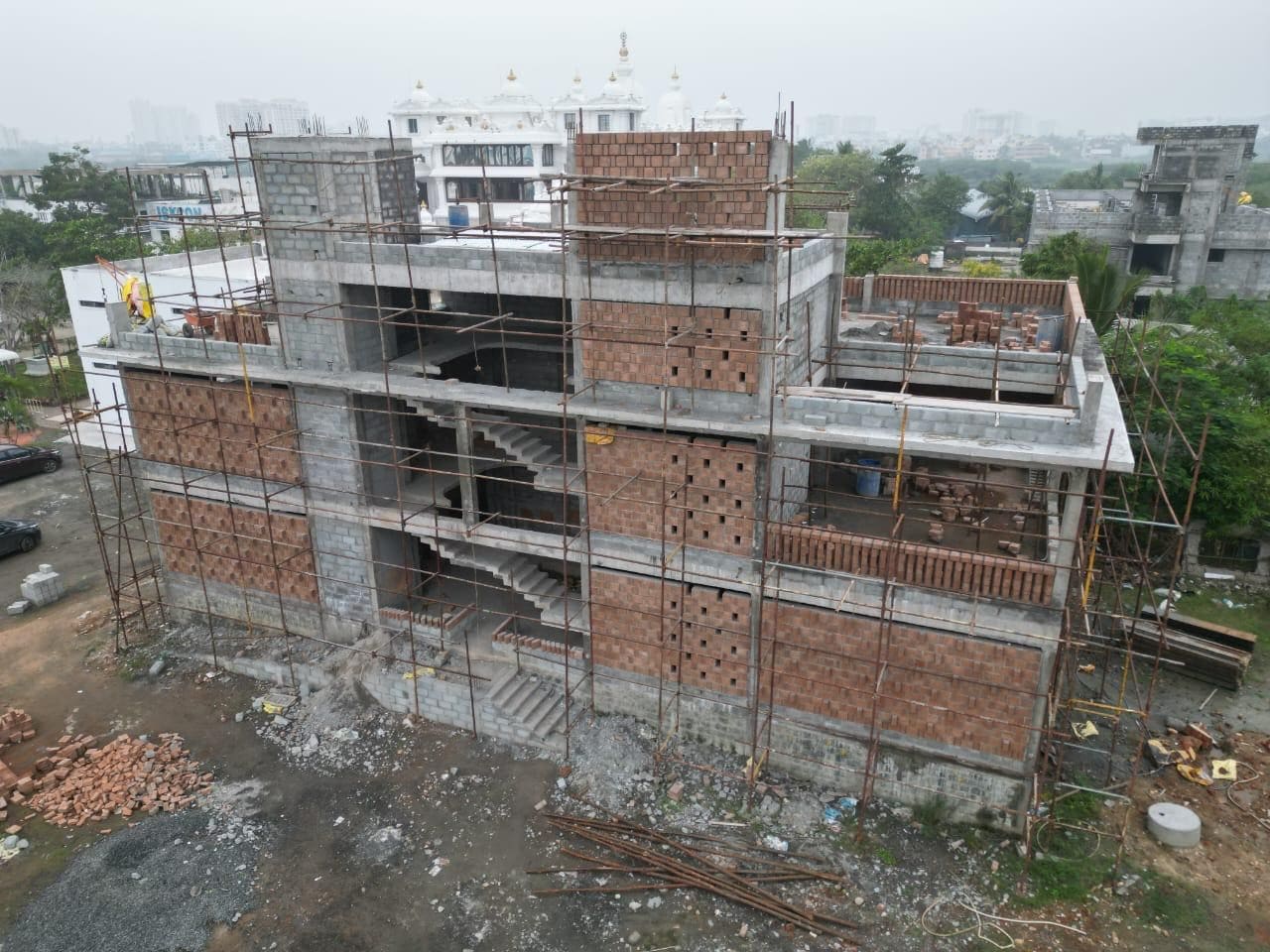
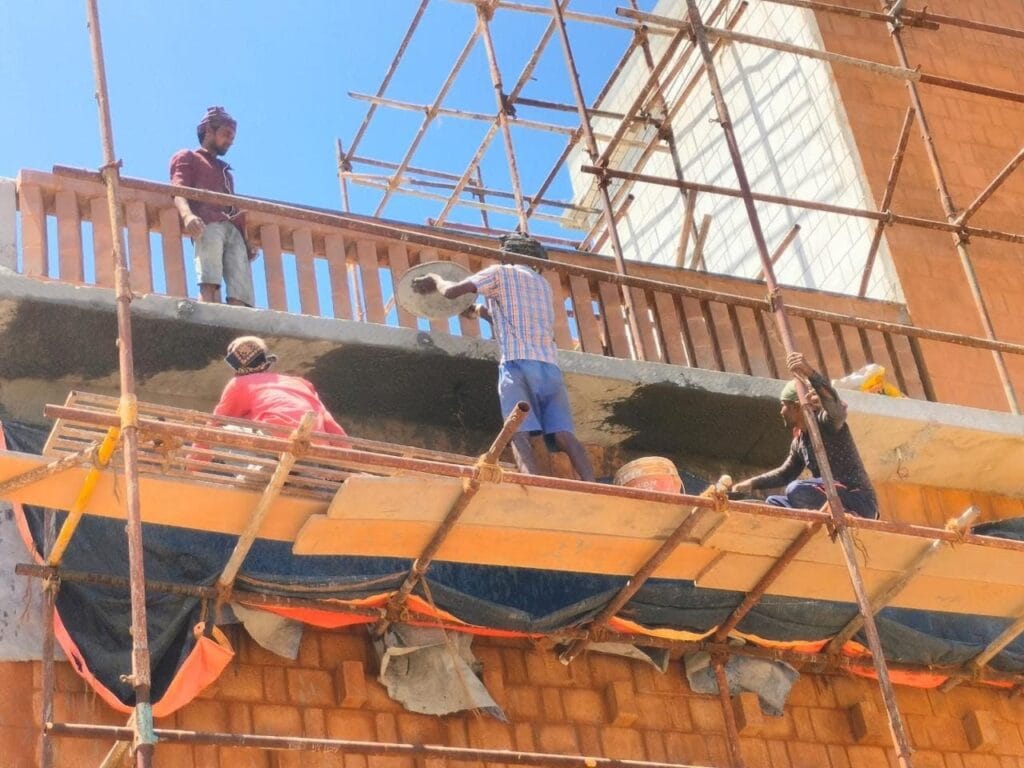
What follows are glimpses of the building in process—moments captured as earth blocks were laid, as plaster was smoothed, as metal was bent and welded into place. These photographs document not just construction, but the collective effort that shaped the Centre: hands pressing leaves into wet walls, teams adjusting brick patterns on scaffolding, craftspeople transforming drawings into three-dimensional form.
On site, everyone was Mataji or Prabhuji. “Mataji, can you check the brick courses?” “Prabhuji, can you create a mud plaster sample?” Titles dissolved. The design team and execution team merged with a sense of shared purpose. This sense of equality and collective devotion is the gift we treasure most from this project.
The images reveal the building as it truly emerged – gradually, imperfectly, and always in dialogue with those making it.
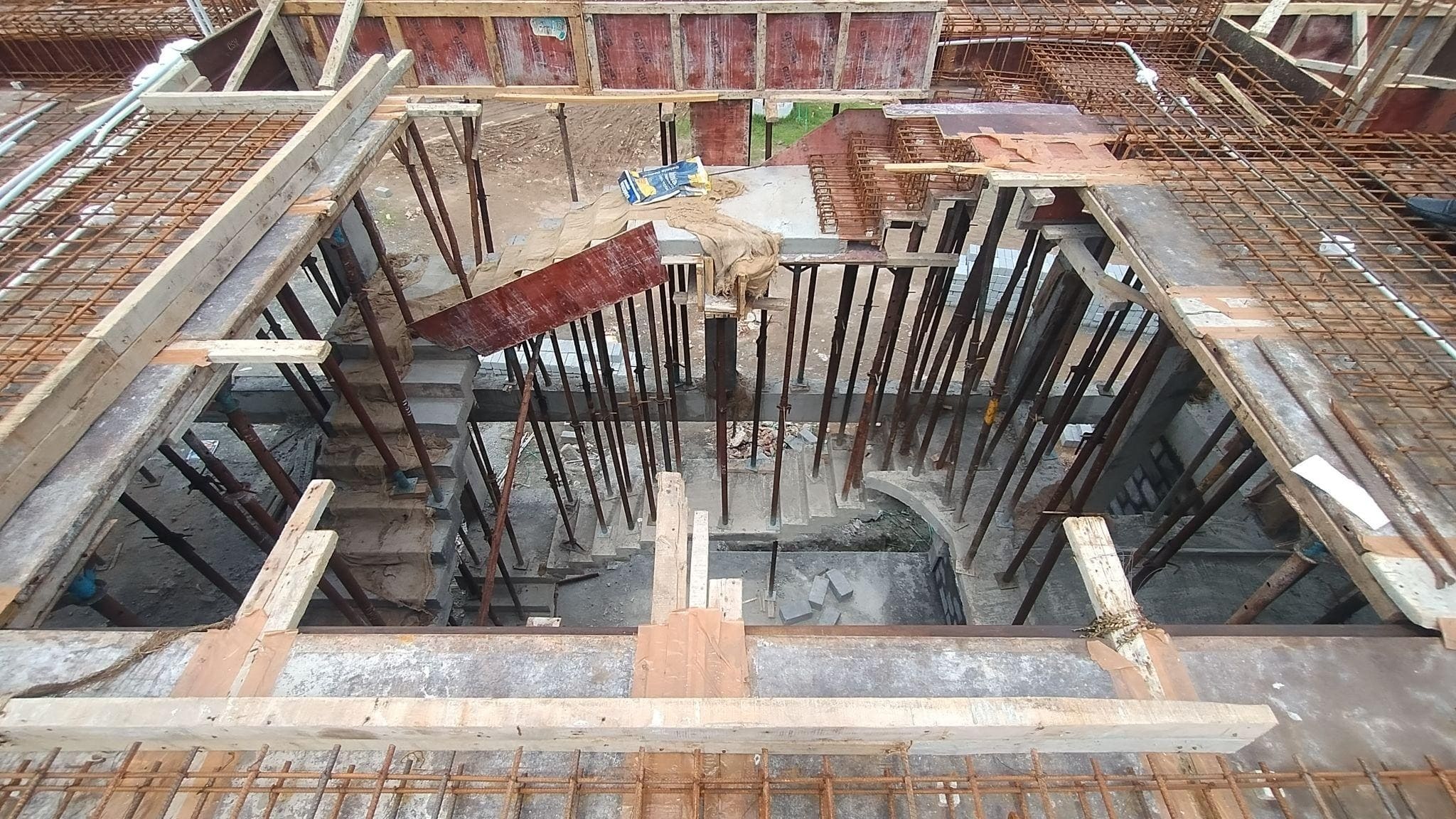
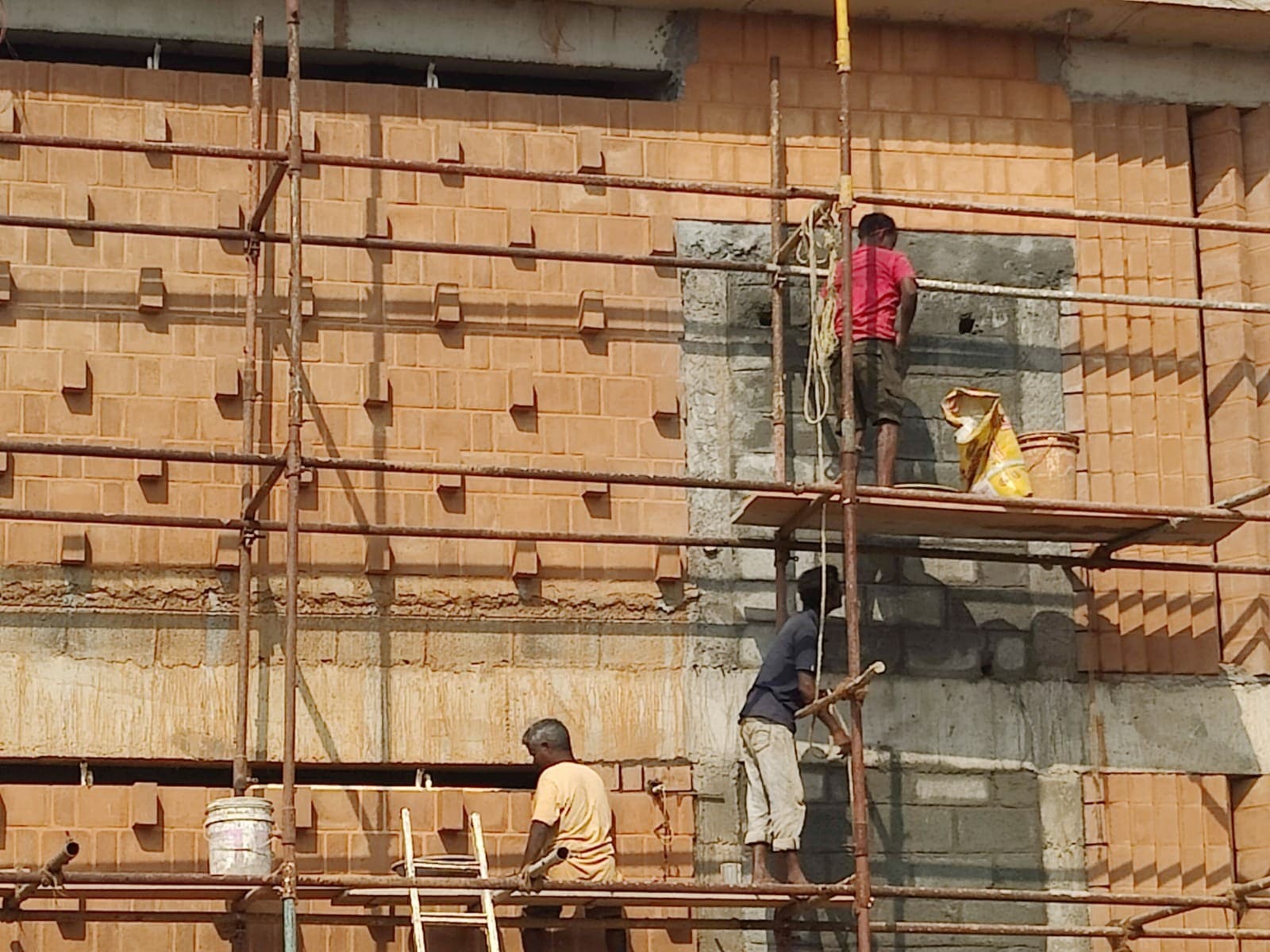
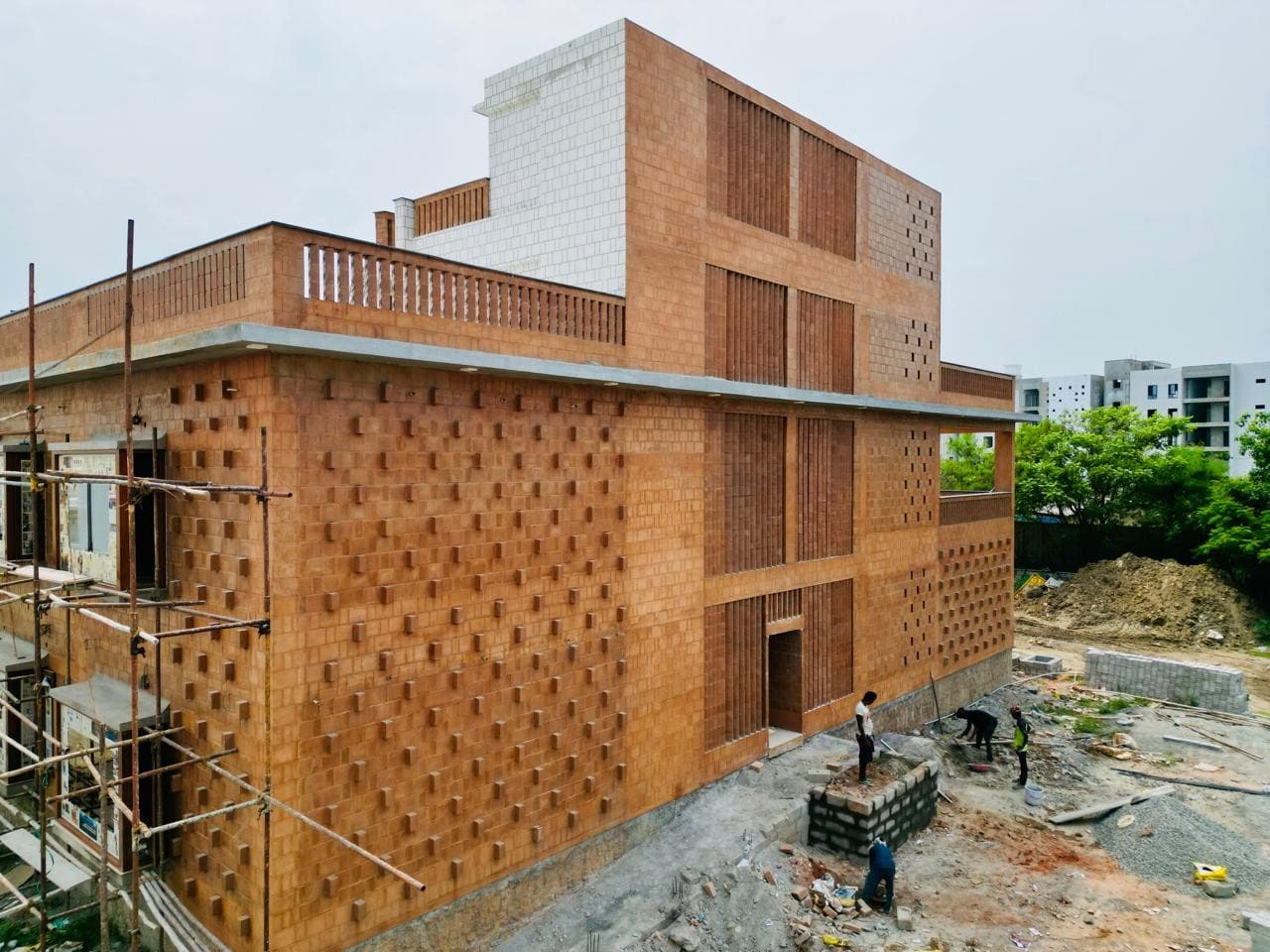
Lessons in Letting Go
Designing a project with public funds taught us patience like no other. Coordinating across multiple teams over three years brought its share of challenges, yet the lessons that emerged were even greater. While Akarmaa remained the constant design presence, execution teams came and went. The one element we saw through entirely ourselves, right to execution, was the lotus pond grill – a process both exhilarating and deeply enriching.
A project’s vision is never static; it evolves through the process. Some changes arose from shifting client needs, others from execution realities. Internalizing Krishna’s words – Karmanye vadhikaraste ma phaleshu kadachana (focus on work, not fruits) – we learned to let go, to surrender, and let the process unfold naturally. The most overwhelming moment was seeing our vision come alive, almost exactly as we had imagined – made possible by the dedication of many teams who brought it to life.
As a public project, the Centre naturally became a space shaped by many voices. Every visitor – from devotees to volunteers – had an opinion or suggestion to offer. This constant stream of inputs made the design process both challenging and collaborative. The team evolved into facilitators of a porous dialogue where diverse perspectives could enter without diluting the larger vision. Some suggestions found meaningful expression in the final form, while others were carefully negotiated. This ongoing exchange shaped the project into a collective effort, where participation began not after completion, but right from design. The result was a building that belonged to everyone involved – its form and spirit co-authored by many hands, guided by a steady architectural vision.
Details: Process and Discovery
Sensory details became crucial anchors in the design process. Stone floors grounded the experience. Walls narrated stories. Some moments emerged from careful planning; others from happy accidents.
Site Imprints
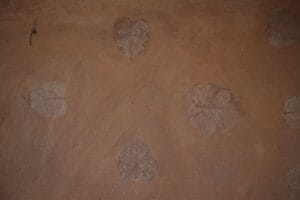
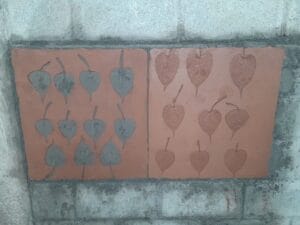
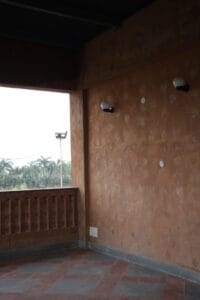
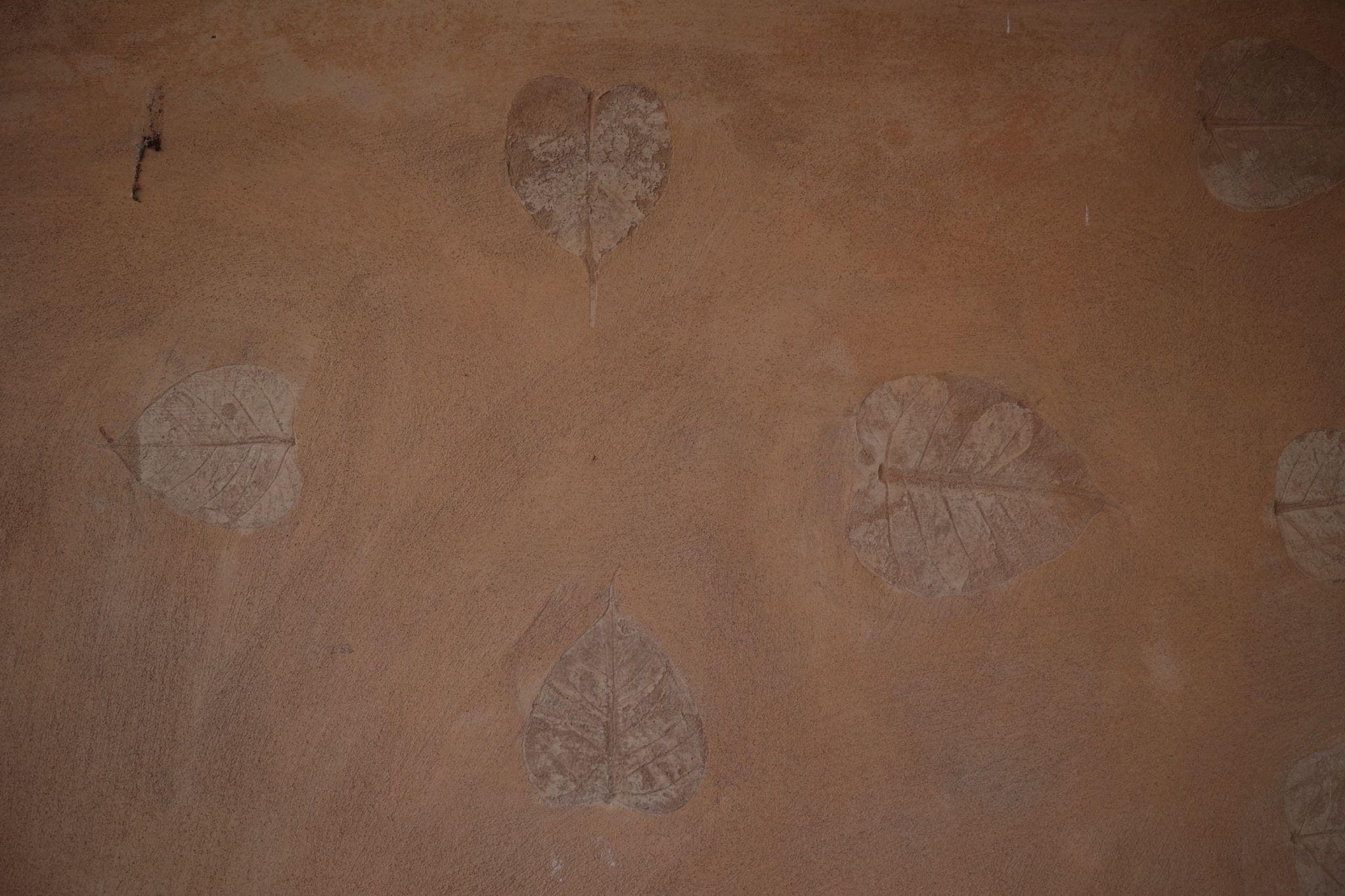
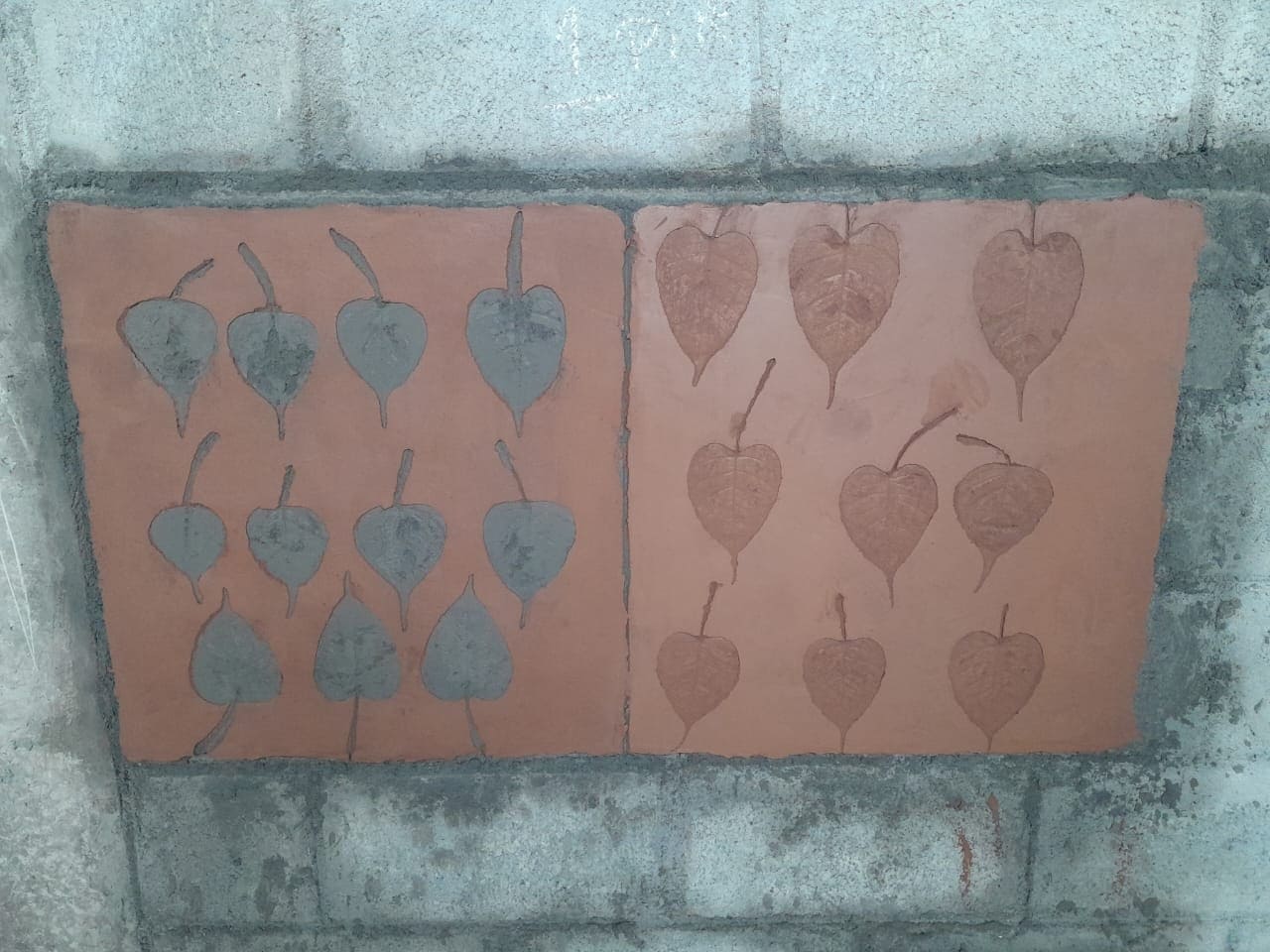
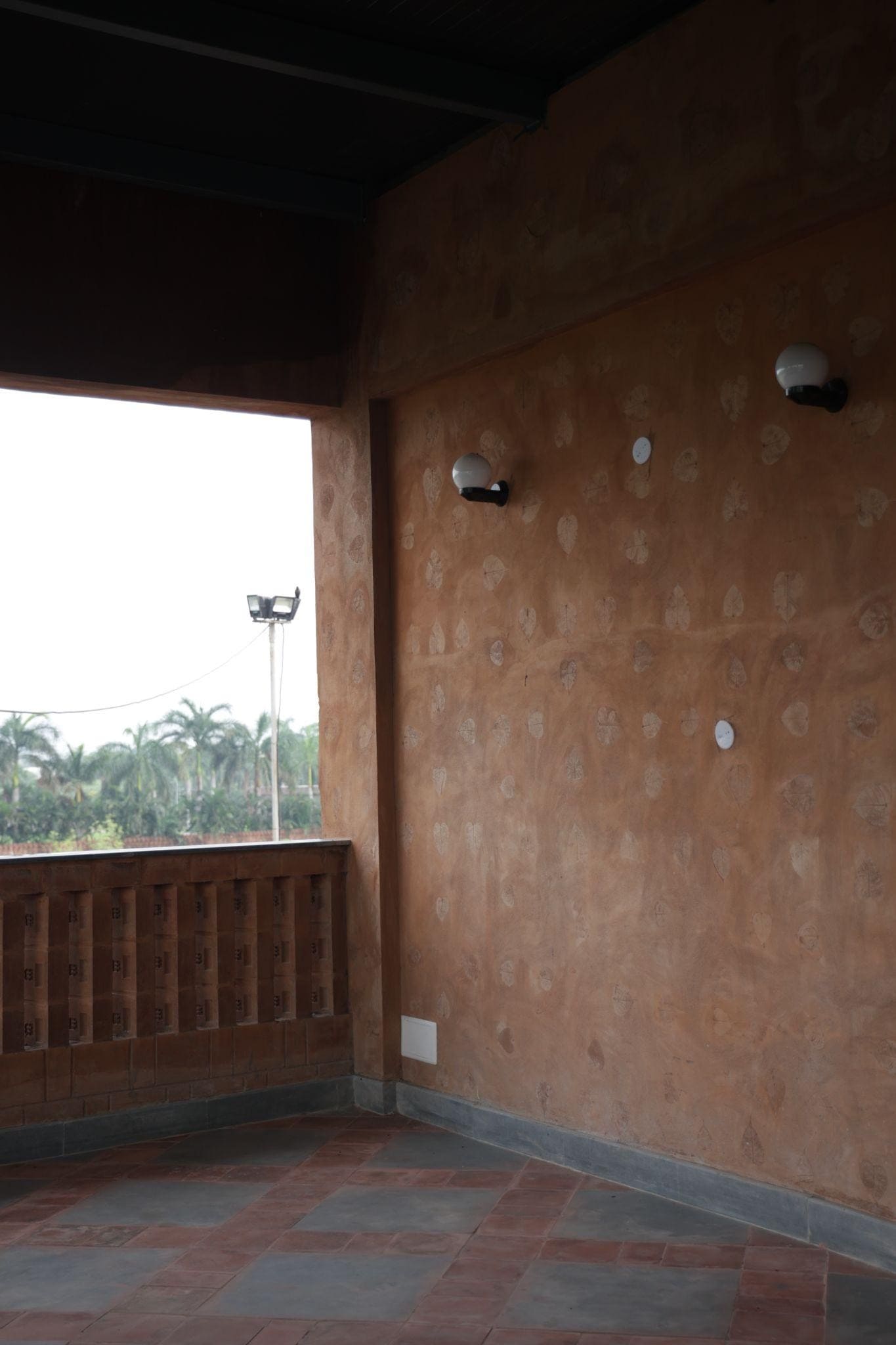
The northeastern section of the first floor was opened out as a semi-open space for collaboration and connection. Kota stone floors grounded the experience, while mud-plastered walls invited touch. To bring tactility, we looked to the site itself – to fallen leaves beneath a peepul tree on the temple grounds. During plastering, these leaves were pressed onto the wet surface. As it dried, some lifted off and drifted away, while others stayed embedded, creating fleeting moments of delight for the makers. What emerged was a wall that carried traces of the site itself, holding the memory of its making – a simple, hands-on process that connected building to place.
The Lotus Pond Grill: Parts to a Whole
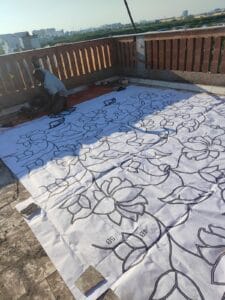
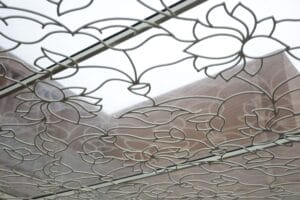
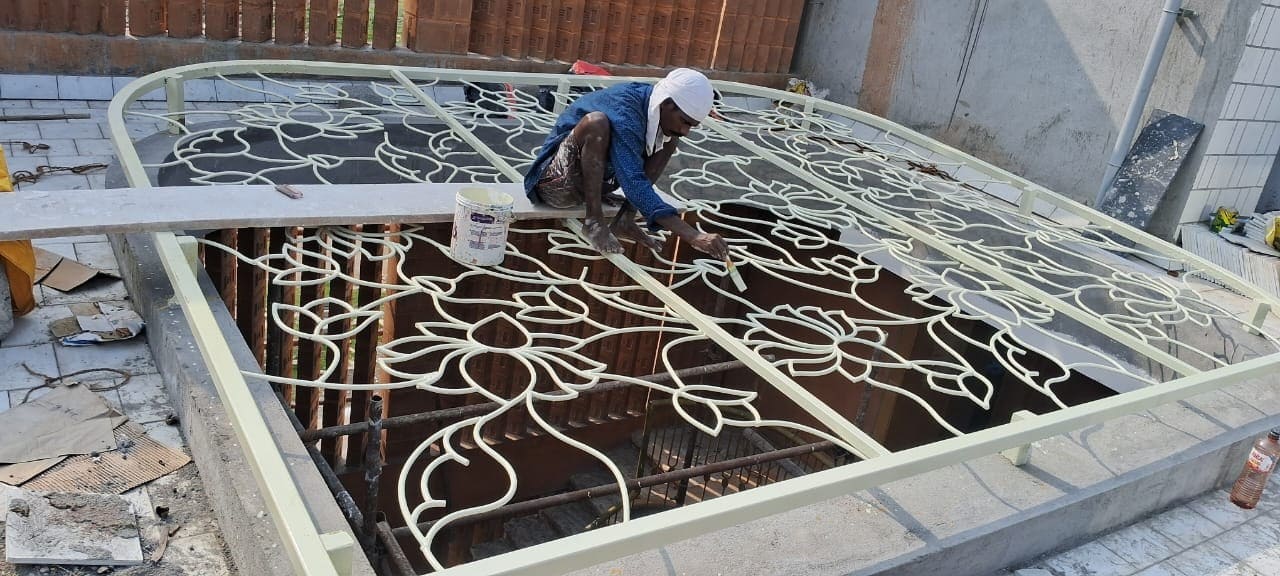
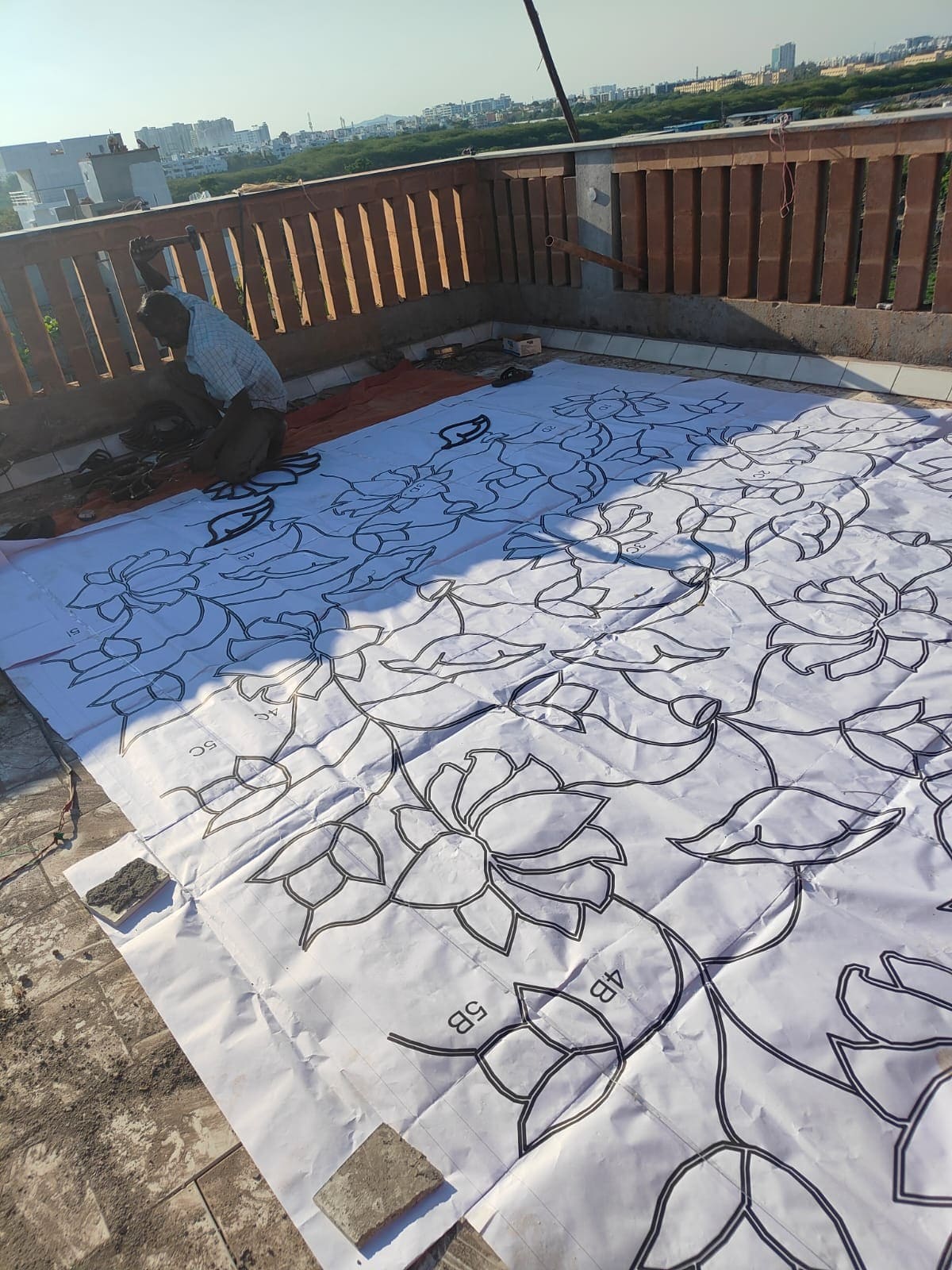
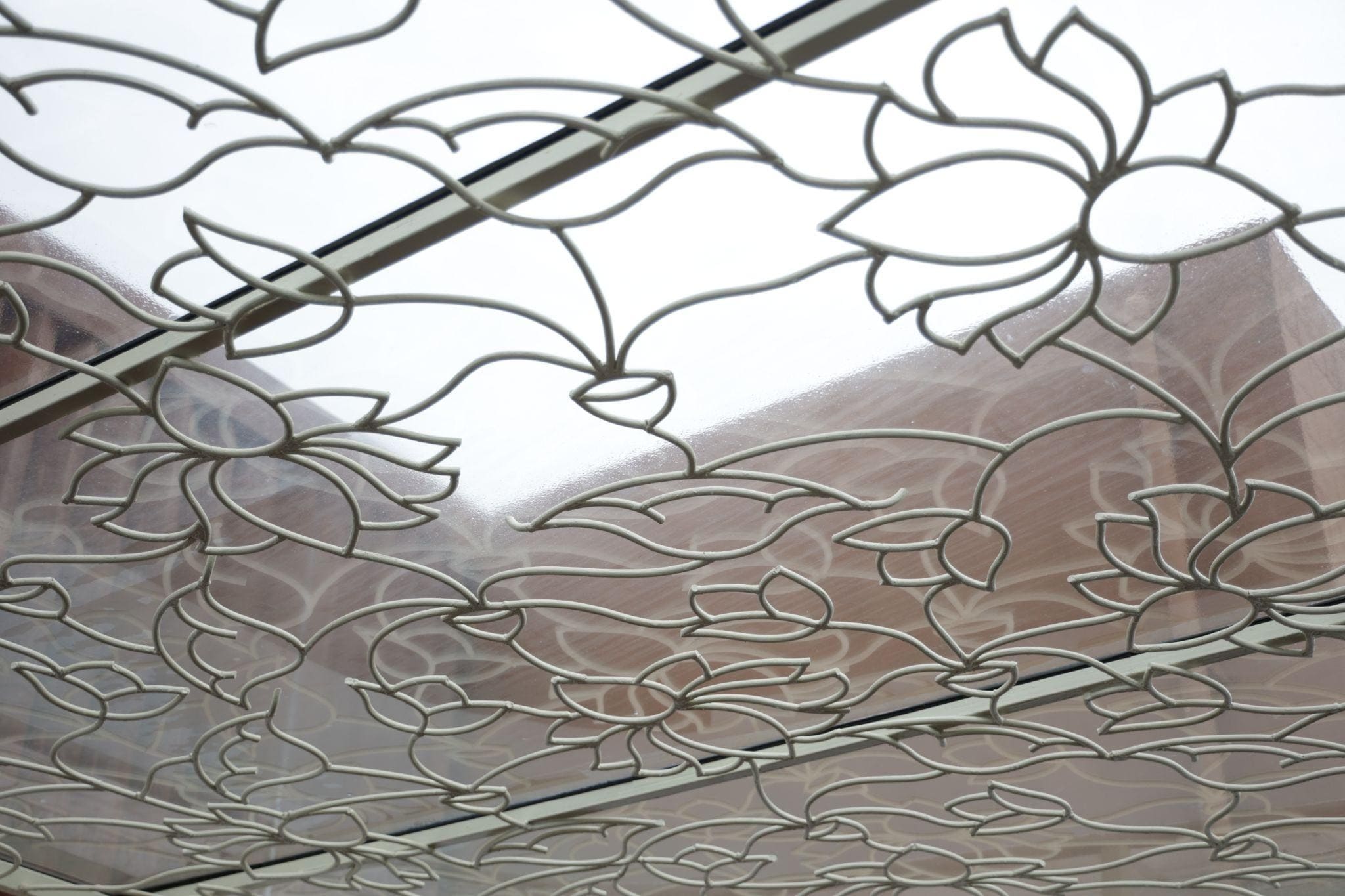
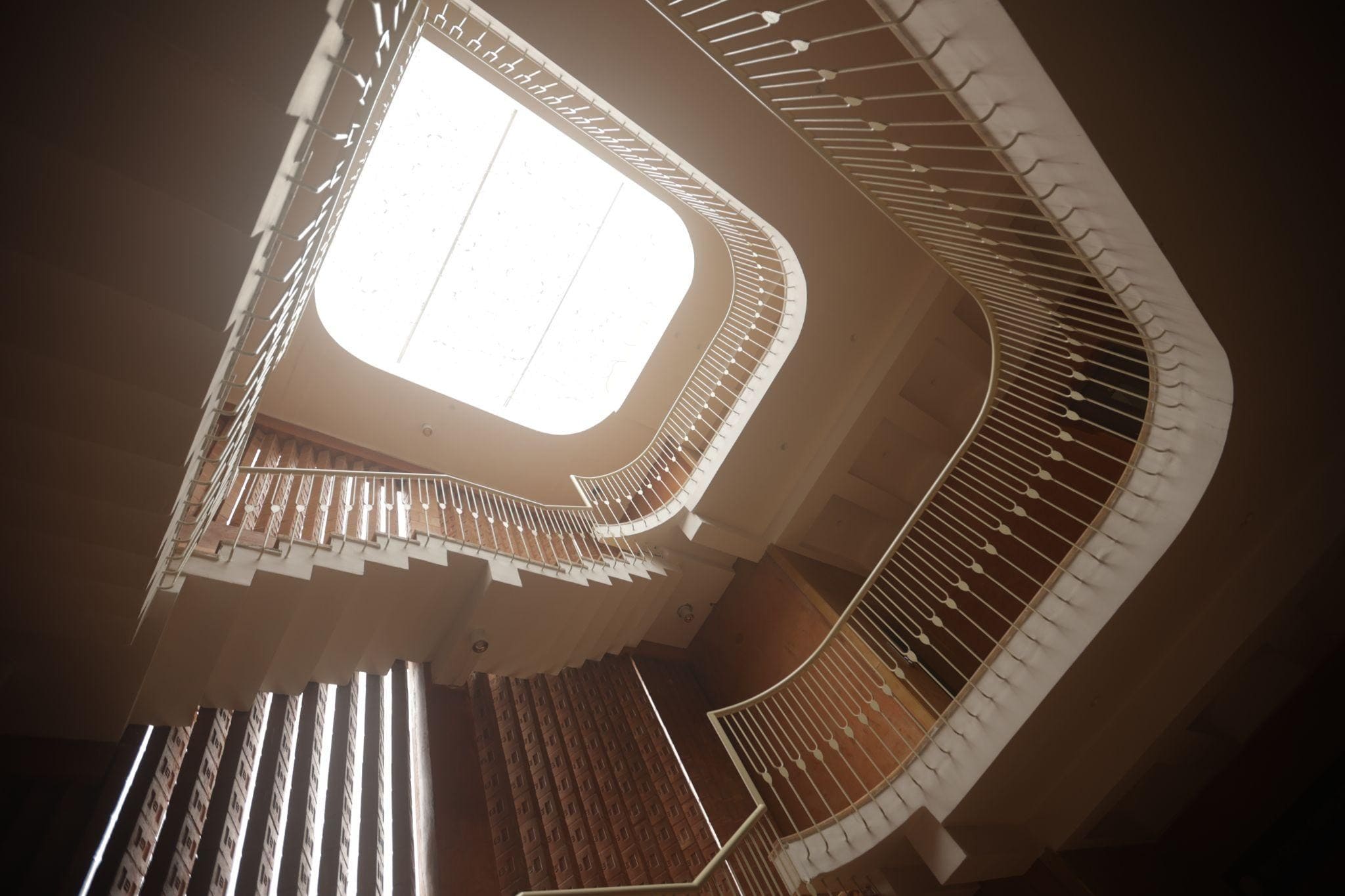
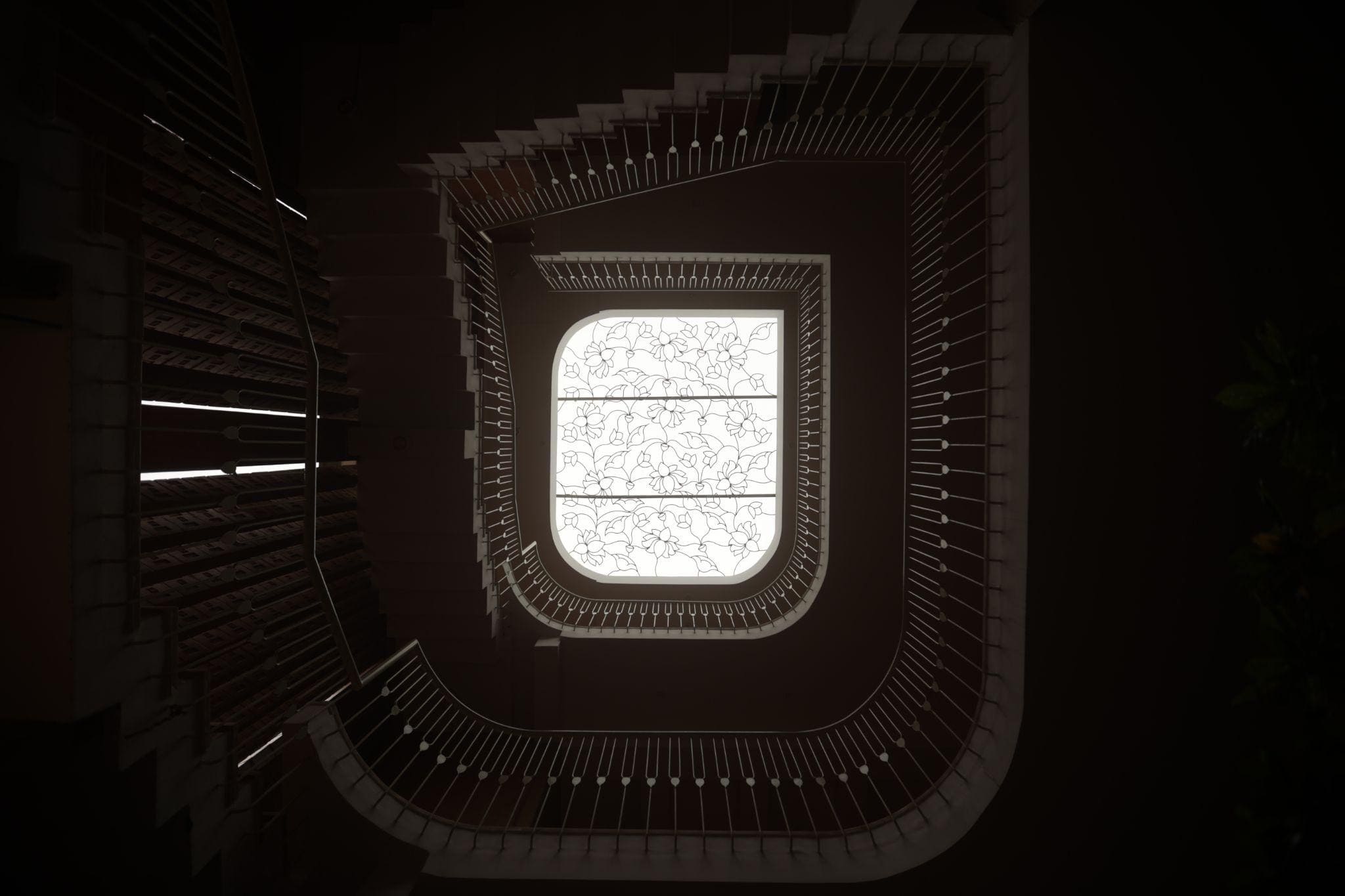
The grill over the central skylight inspired by Patachitra and the mythical story of Gajendra Moksham – became one of the most ambitious yet rewarding elements. We had imagined it as a single, seamless piece, but at 11 by 15 feet, precasting was impossible. To work around this, we printed the design on A0 sheets, assembled them to full scale, and used these as guides to bend and shape the metal on site. Much of the welding had to be done high above the ground, with constant adjustments to get the curves just right.
What made it worthwhile was watching how sunlight filtered through, casting lotus and leaf patterns that moved across walls and floor throughout the day. From drawing it out in our Hyderabad studio to shaping and assembling it on site, this grill became a lesson in patience, improvisation, and close collaboration – and in the end, it brought the design to life in ways we hadn’t fully anticipated.
The Jagged Brick Configuration: Adapting with details
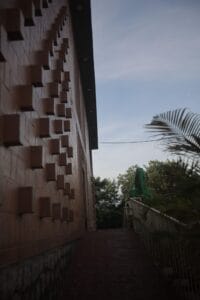
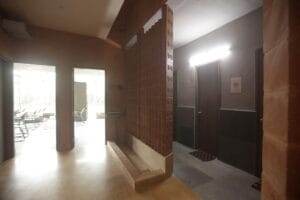
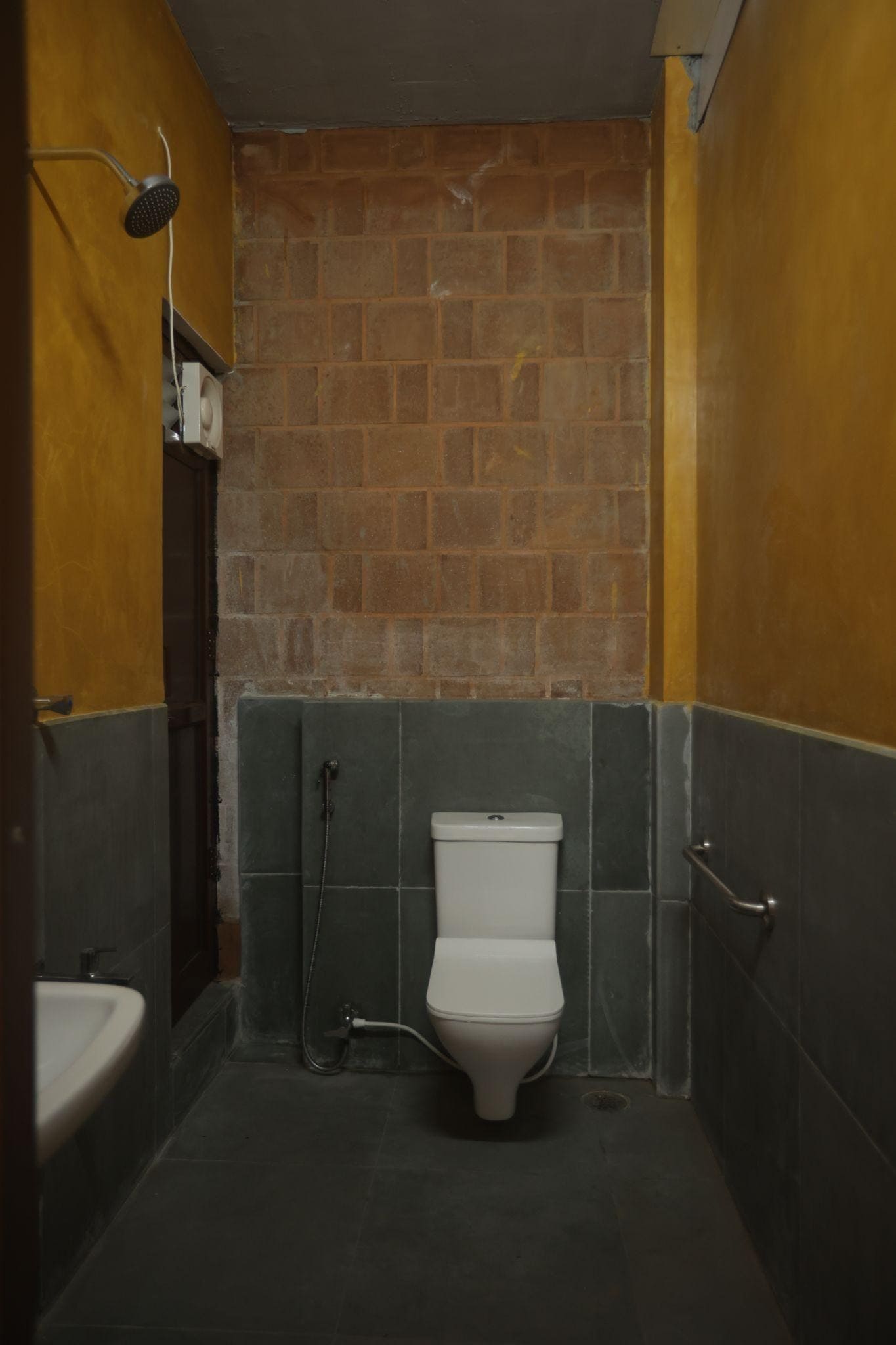
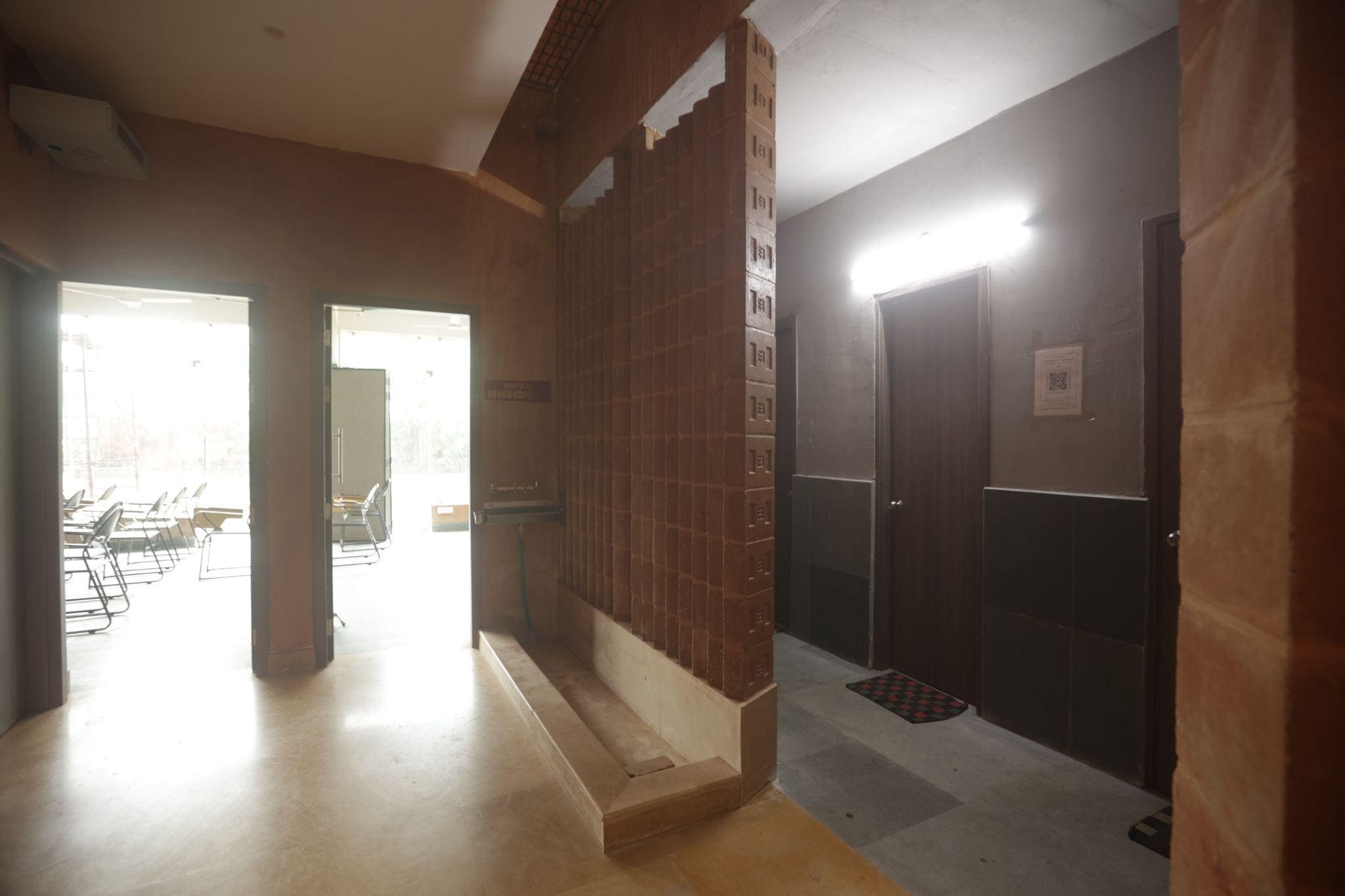
The jagged brick pattern on the façade became one of the project’s defining details, yet it was also a product of continuous on-site improvisation. What began as an aesthetic exploration soon revealed functional challenges. In the bathrooms, the pattern had to stop short at a certain height to accommodate skirting, while near the staircase it extended all the way to the floor, resulting in subtle variations that lent each segment a distinct character.
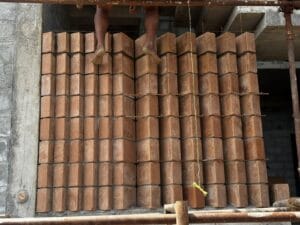
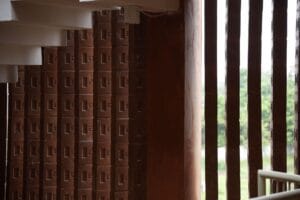
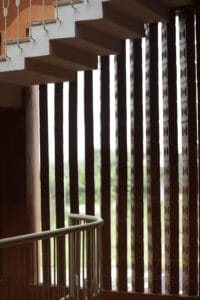
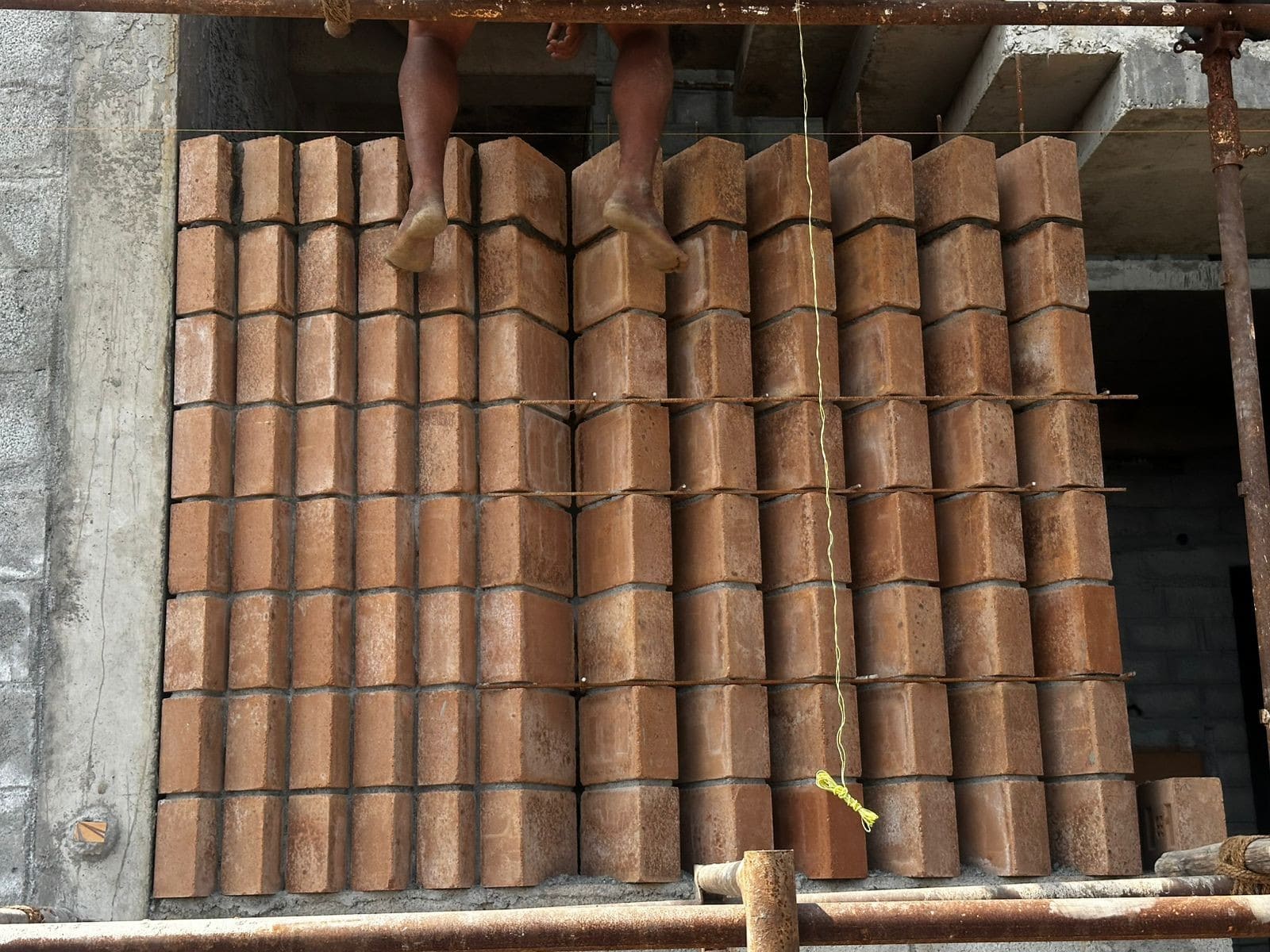
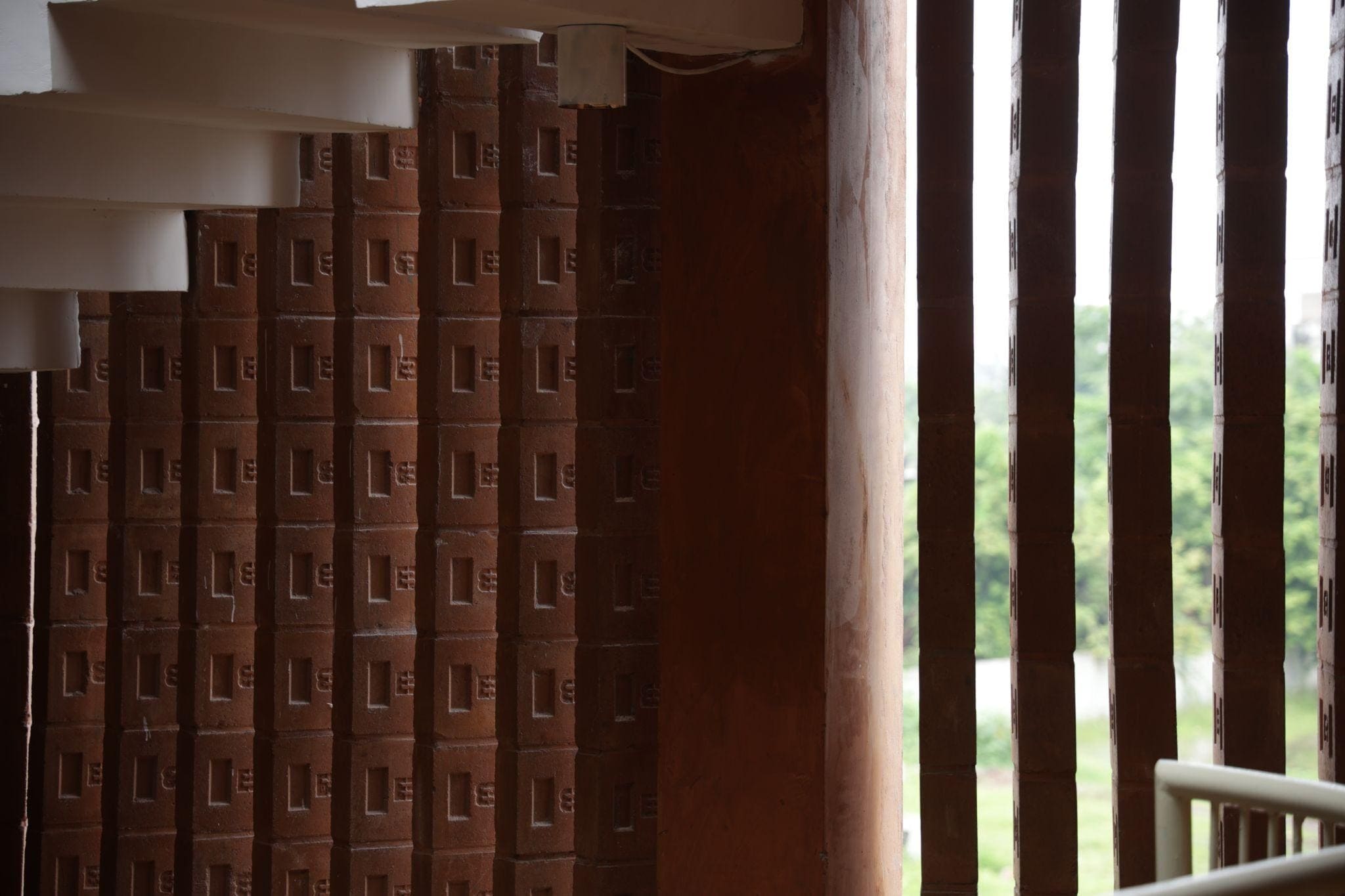
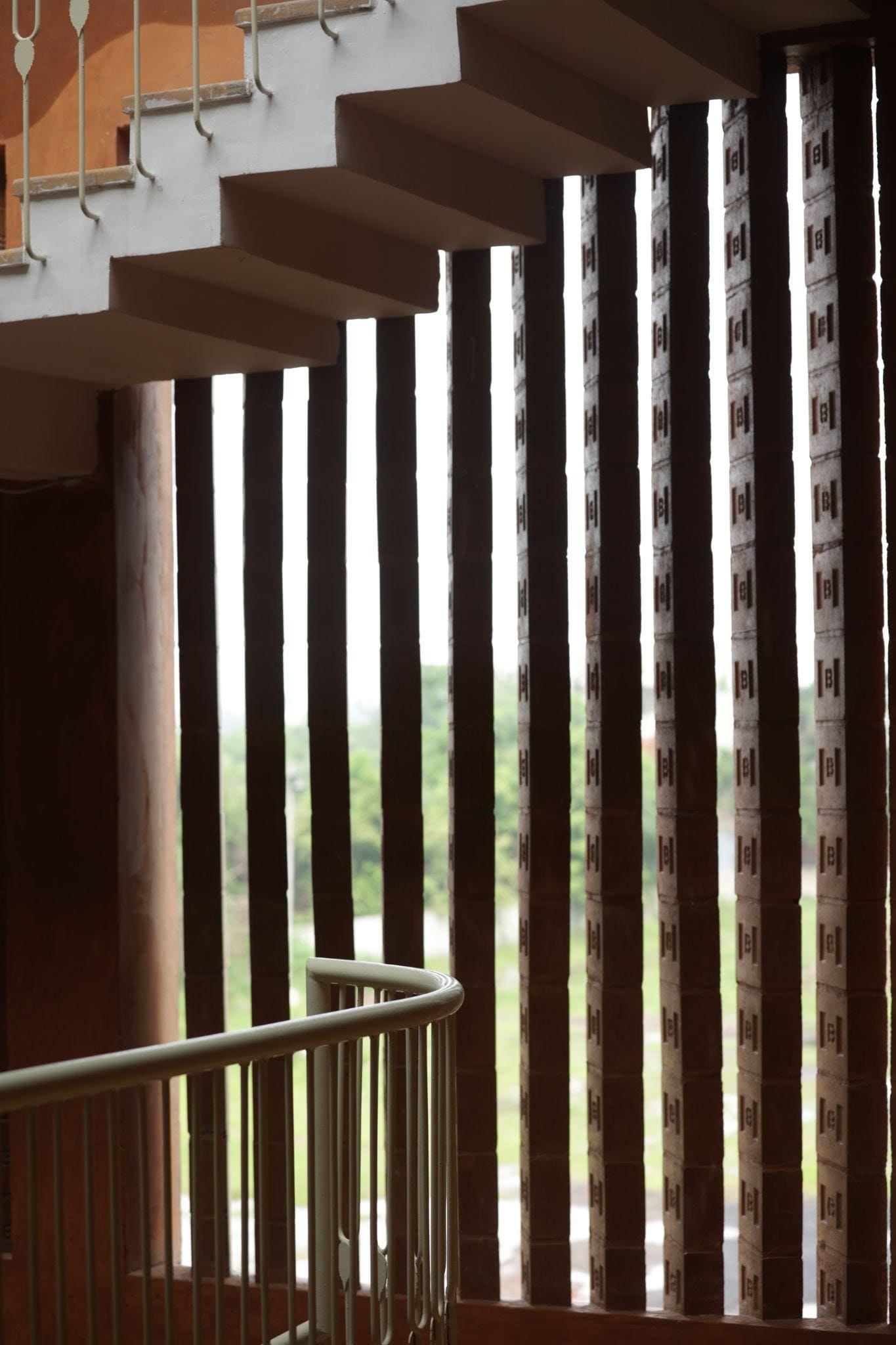
These shifts weren’t planned as stylistic choices but emerged naturally from construction realities. Even small details like fixing a wall-mounted basin onto the uneven brick surface demanded fresh thinking and coordination among multiple teams. Each such moment called for real-time decisions, shaping the building through adaptive design.
Material and Care
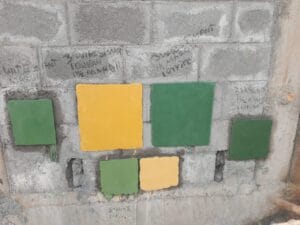
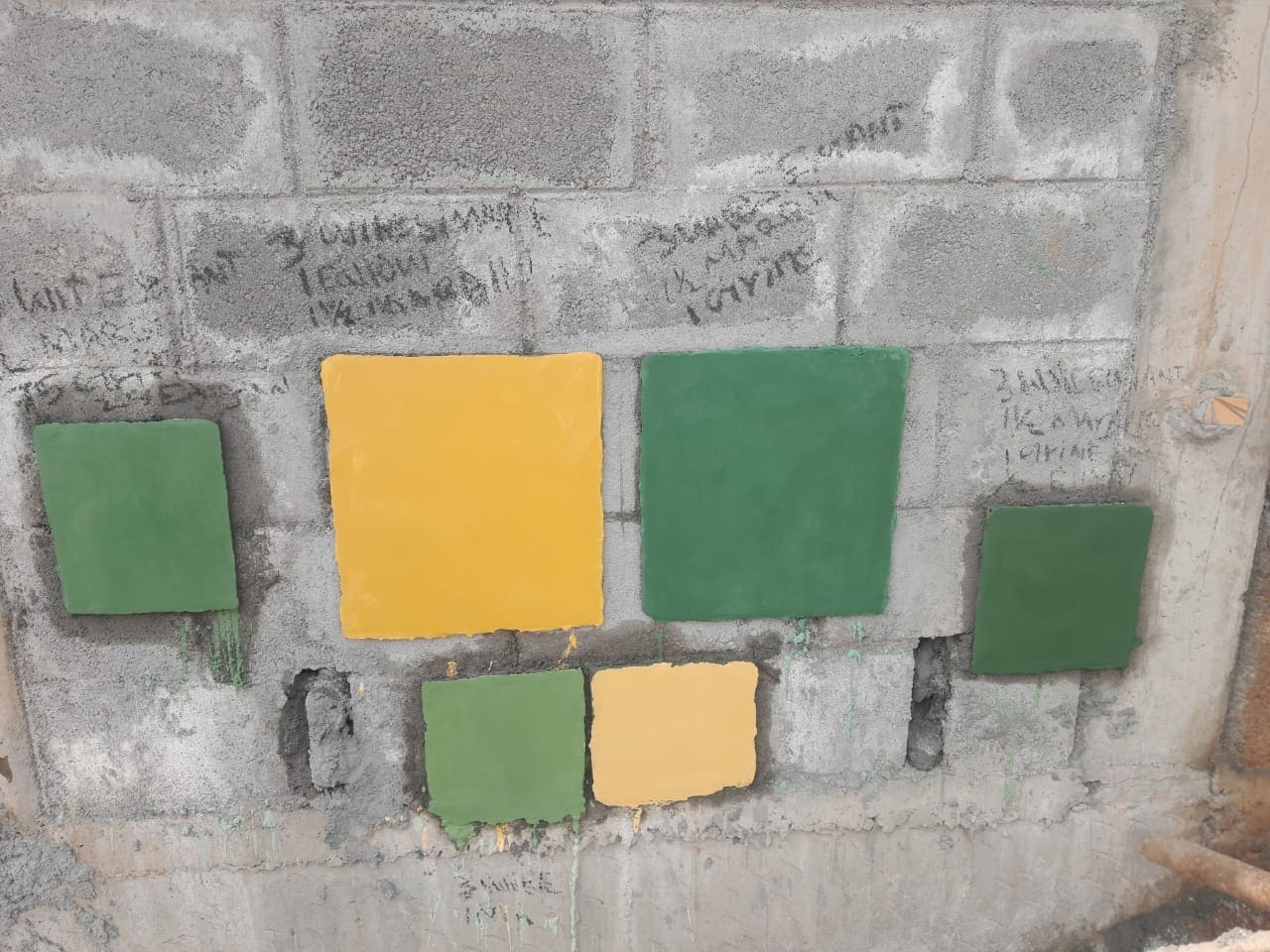
The bathrooms became experiments in material and care. Oxides in green, red, and yellow enlivened the floors of the corresponding bathroom on each level. Beyond colour, small details shaped experience – accessible toilets for men and women, and lowered wash basins for children. Subtle as they were, these gestures reflected the intent to make every space inclusive and equally accessible to all.
Invoking the Spirit of Space
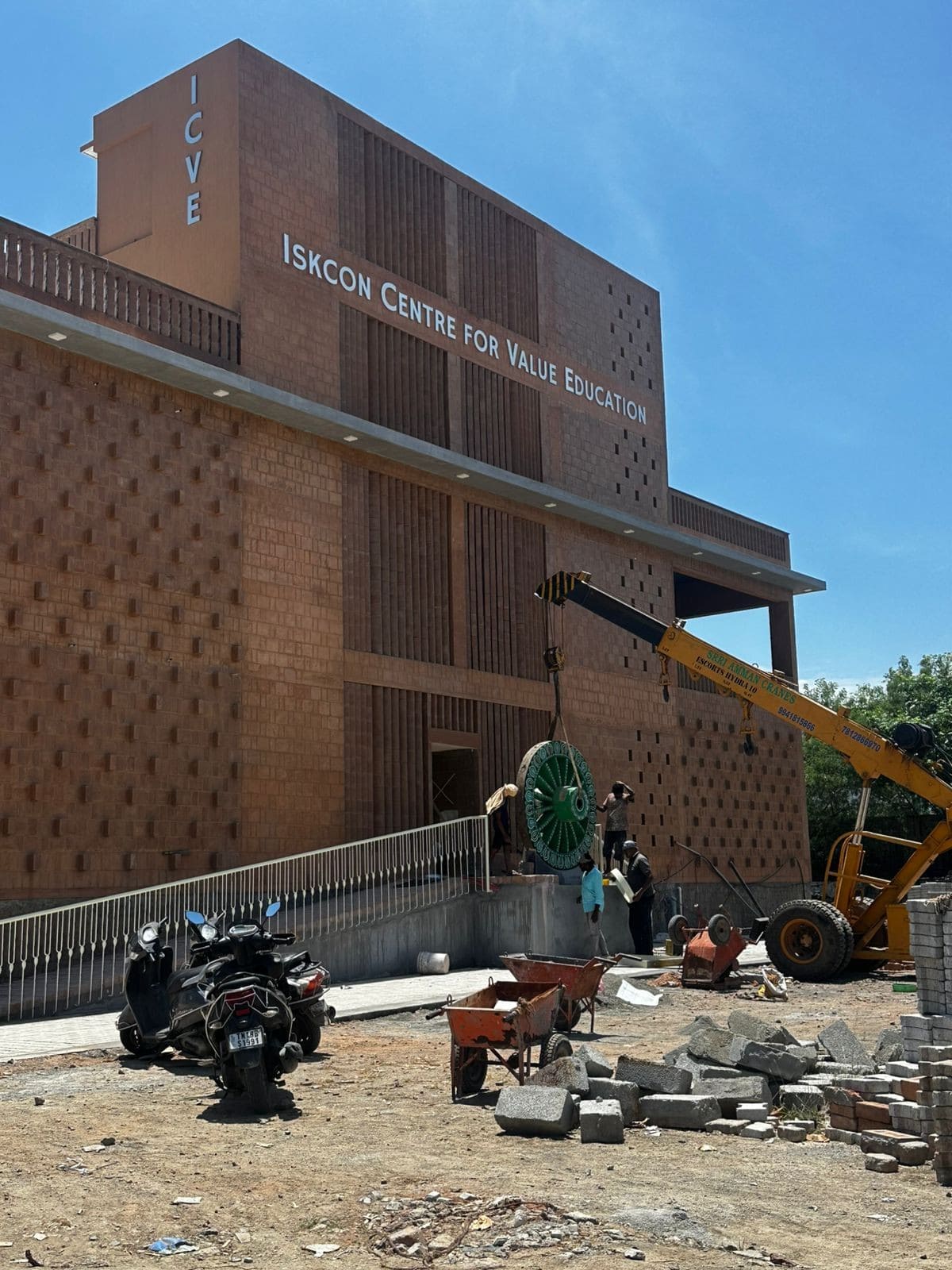
The building’s muted frontage is punctuated by a green spoked wheel, reminiscent of Konark, symbolizing the passage of time and cycles of transformation. Ascending the ramp, one bows in humility before entering – the gesture is built into the movement itself.
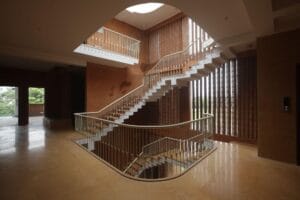
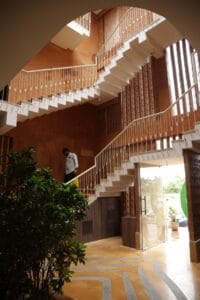
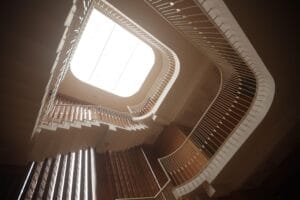
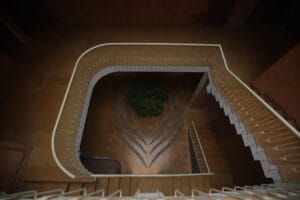
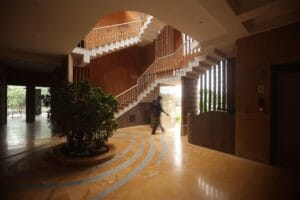
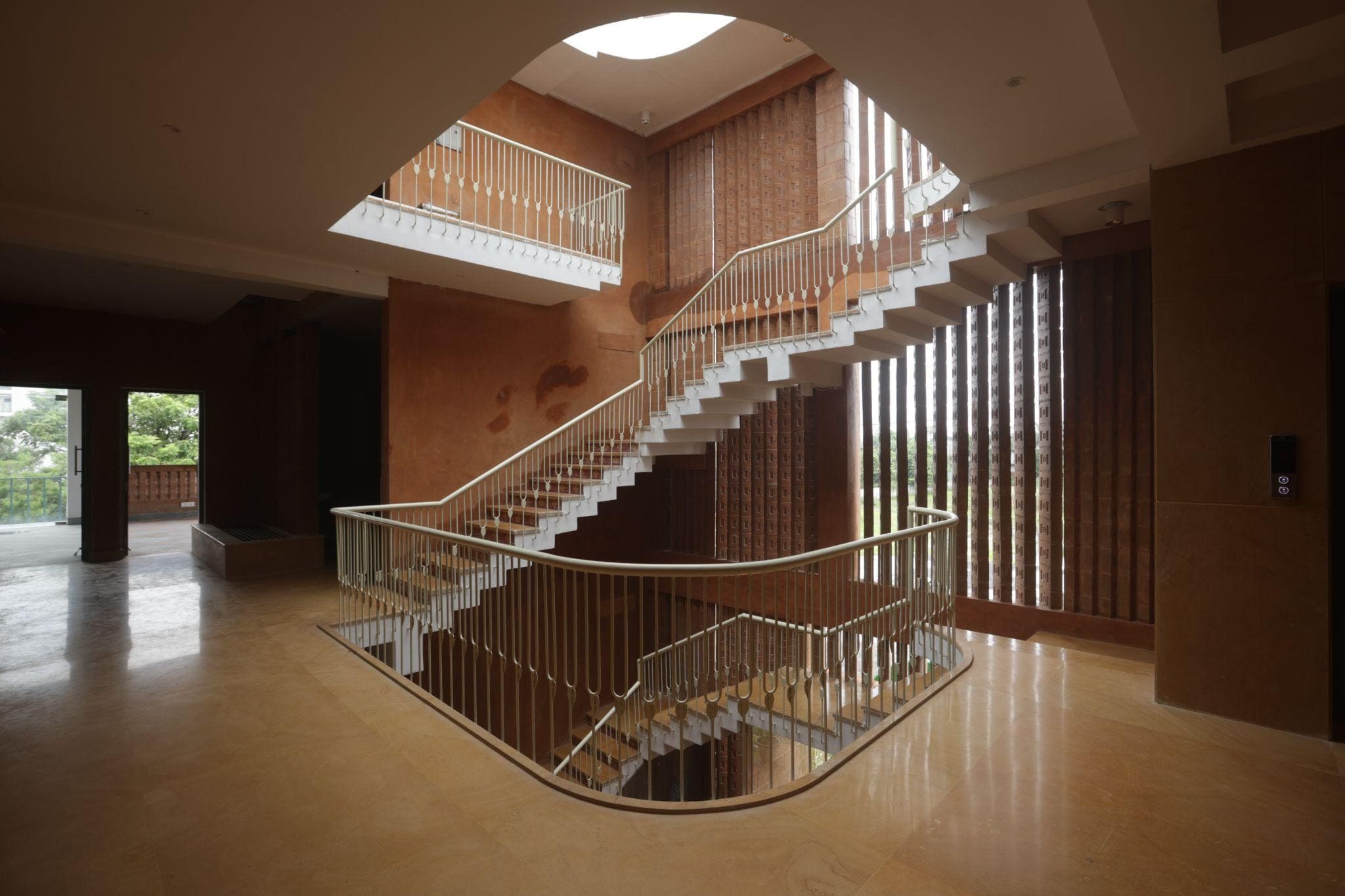
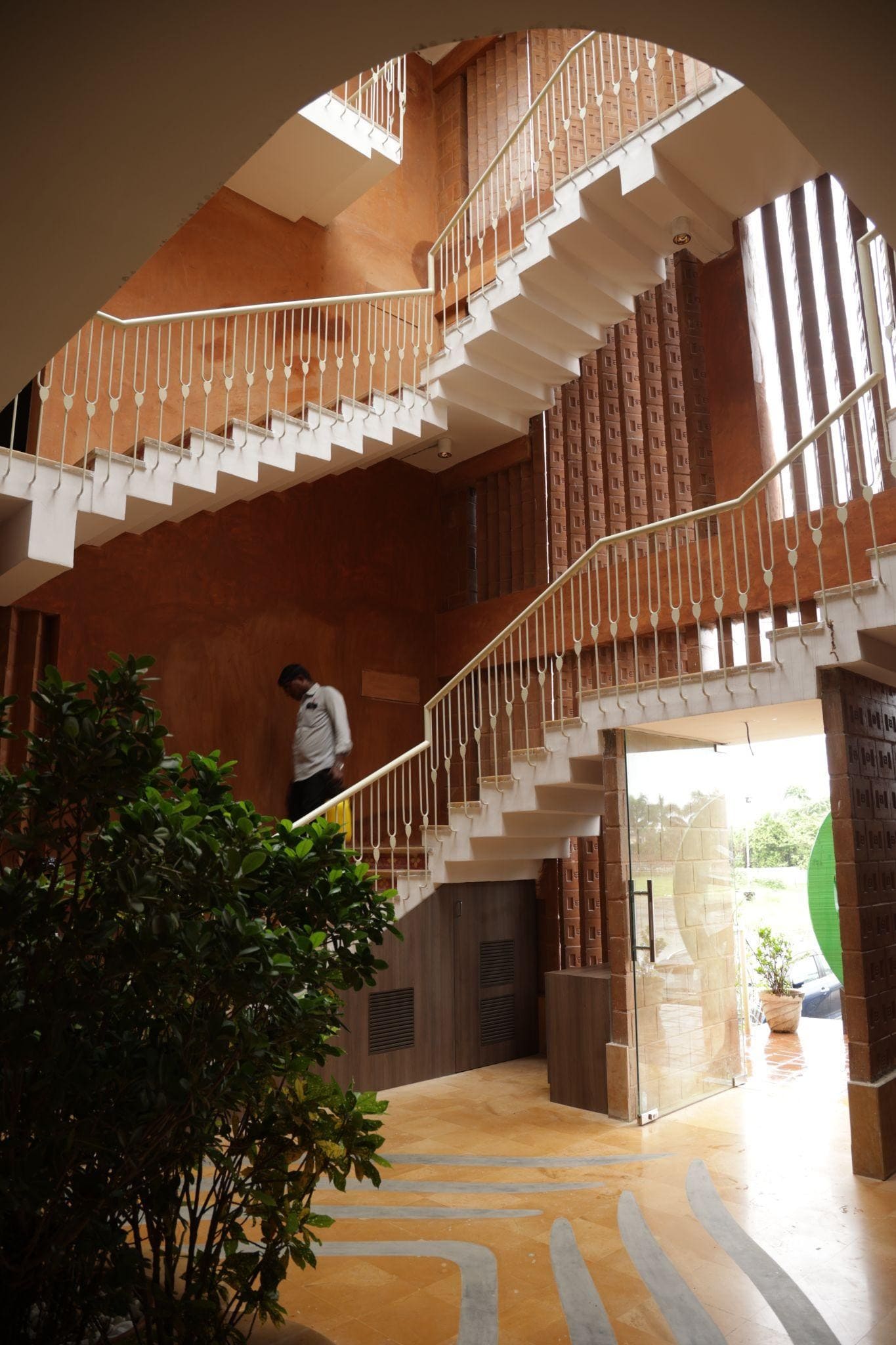
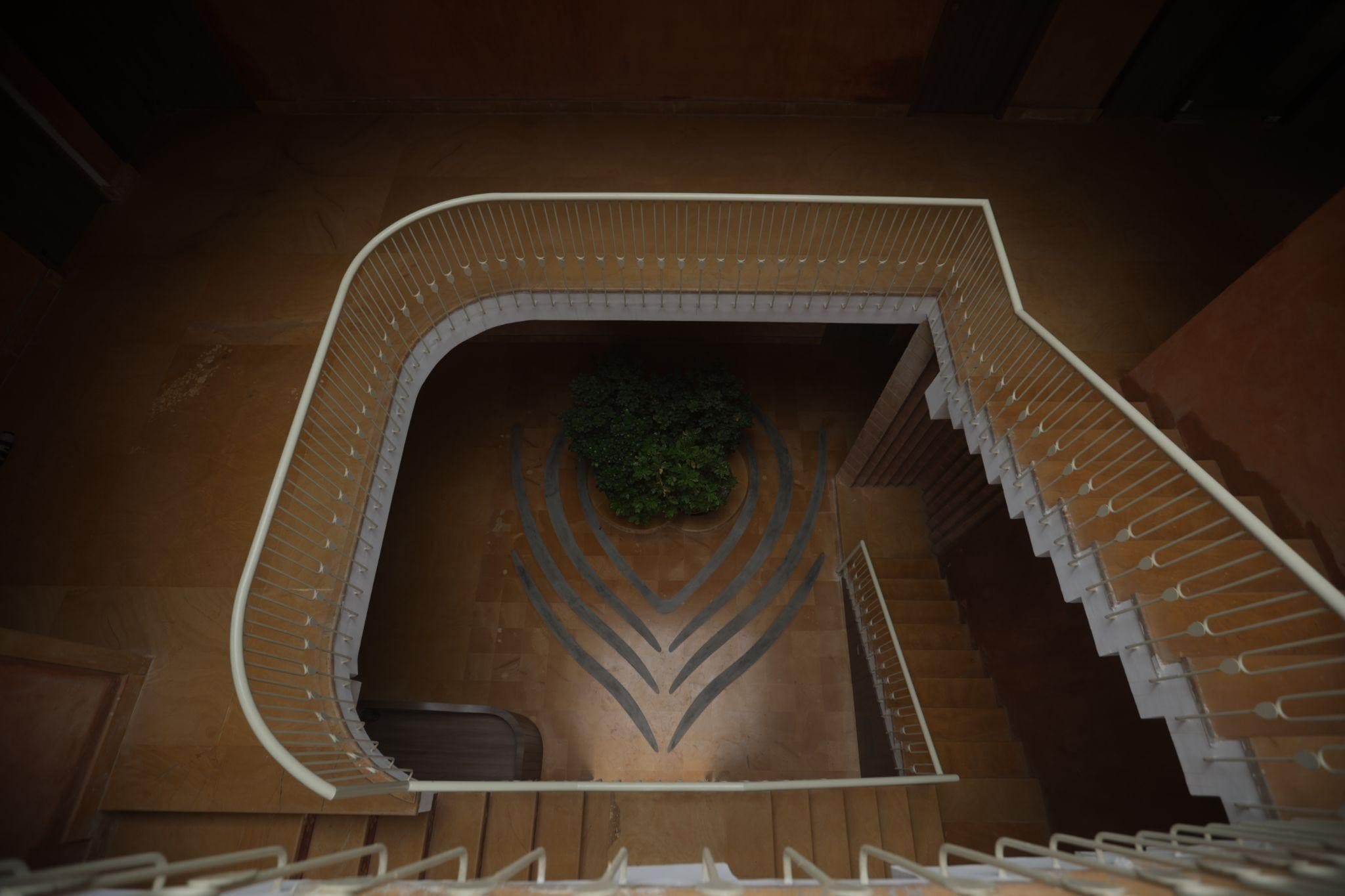
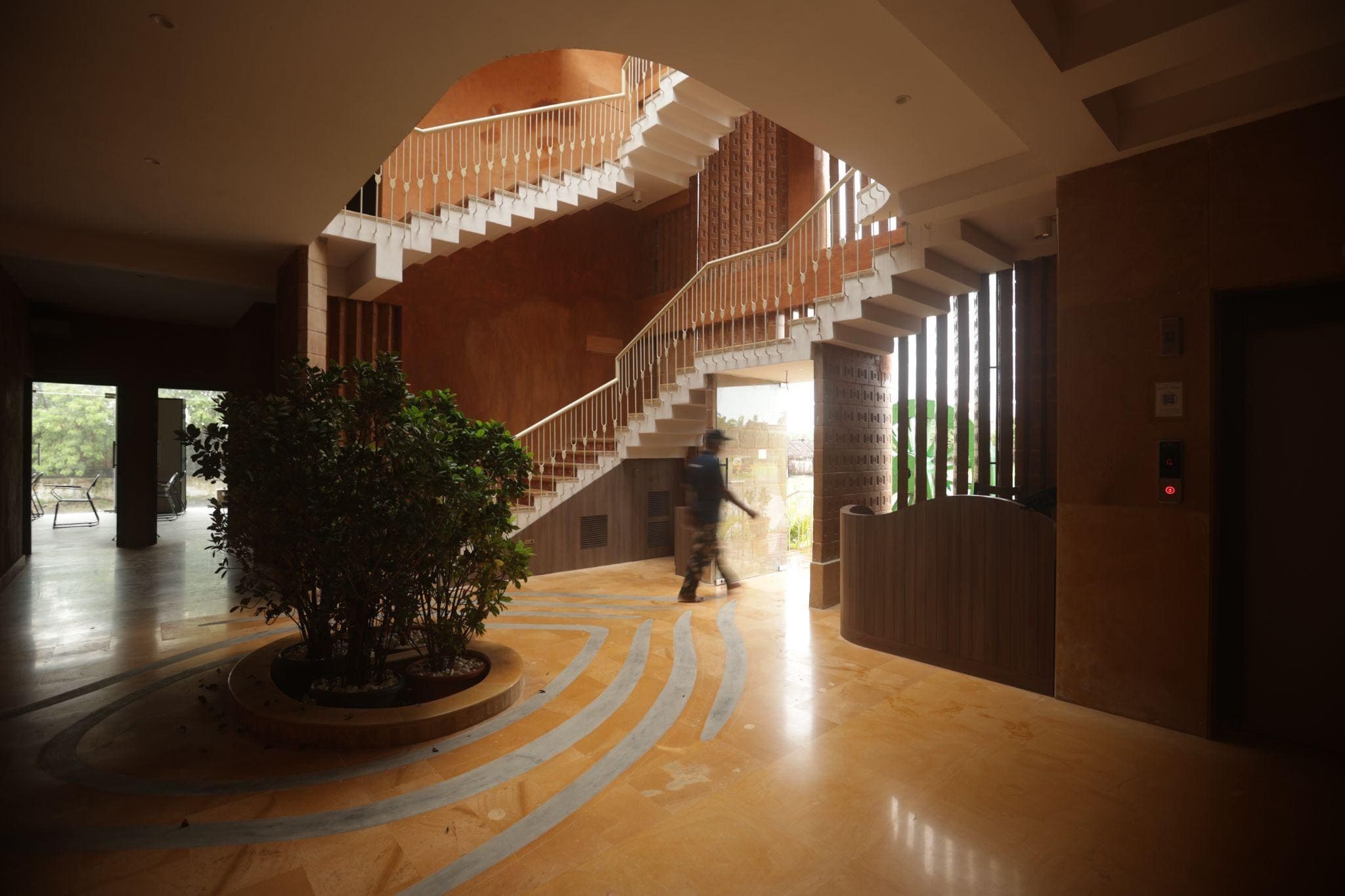
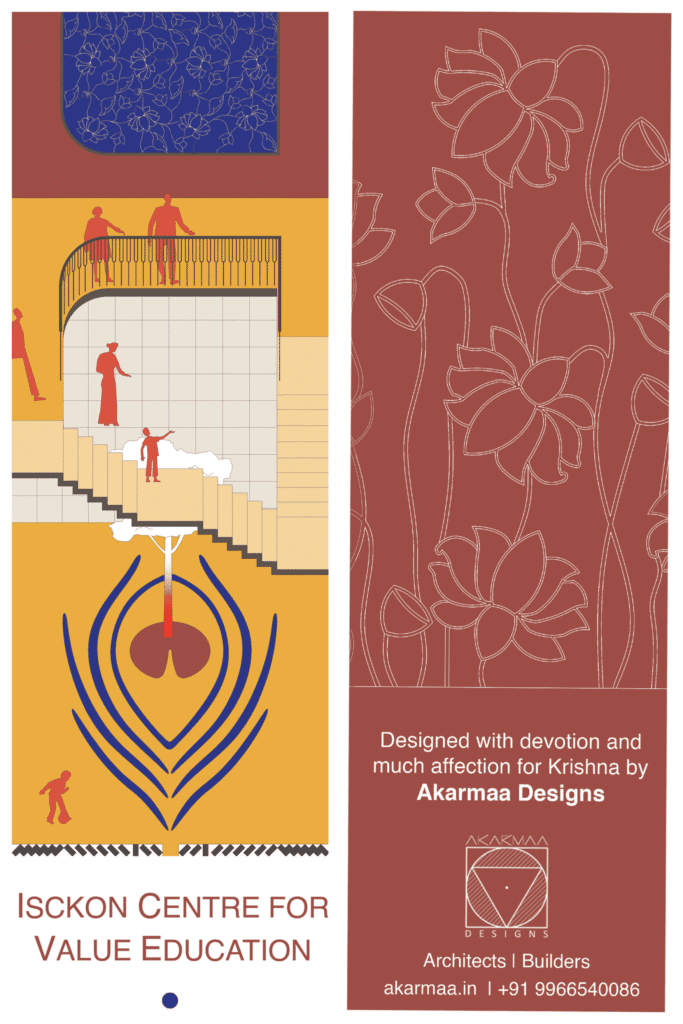
The foyer unfolds into a double-height courtyard open to the sky, where space dissolves into light and air. A soft pocket of greens emerges from a peacock feather motif carved into the ground. Sunlight filters through the floral skylight, its shadows dancing through the day. The surrounding mud walls root the space in earth, even as they seem to rise and merge with the skies above.
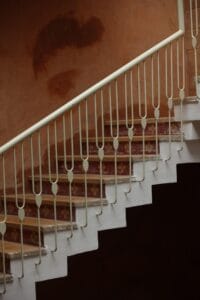
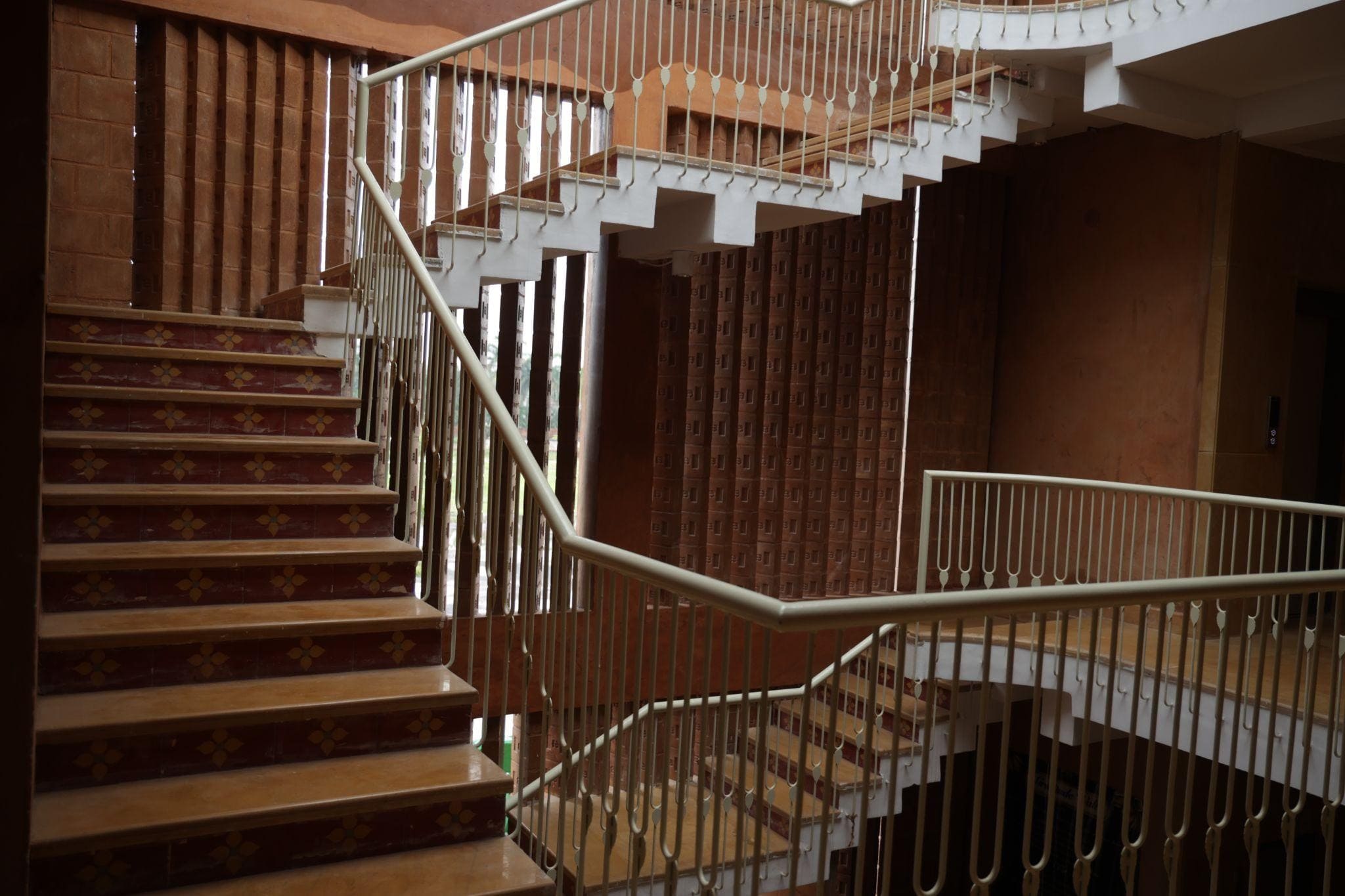
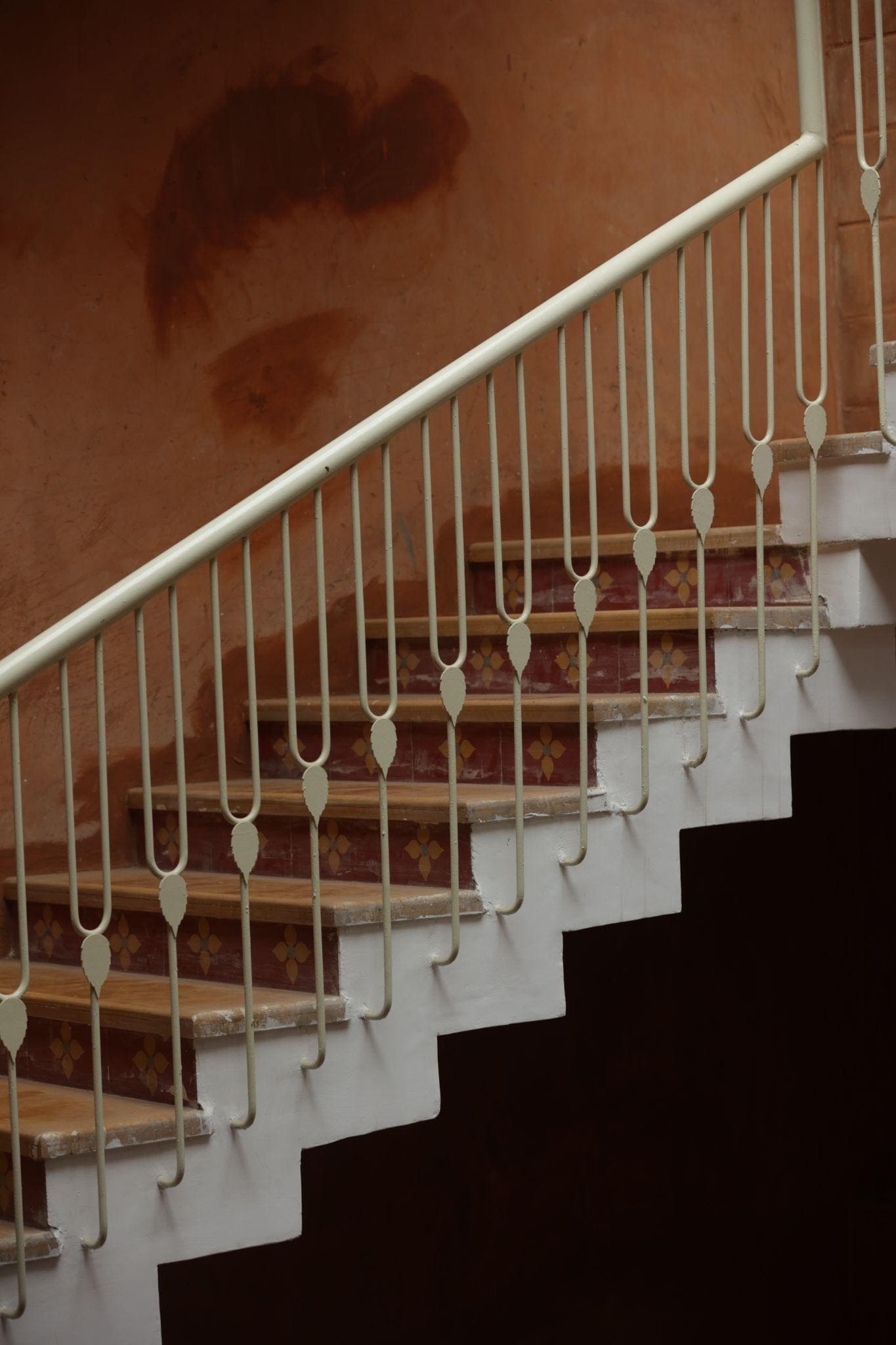
This transition from humility to exaltation is shaped through scale and proportion. The doorway, carved beneath the stair landing, frames entry into the soaring courtyard. An open-well staircase ascends around it, linking two upper floors. The balustrade carries the ISKCON tilak motif, weaving symbolism into craft. Classrooms cluster around this central core – children occupy the ground floor, while adult learners gather on the first. Above, a seminar room hosts workshops and training programs. An elevator connects all levels, ensuring inclusive access.
Evolving Encounters
Faithful to its intent of nurturing reflection, the building reveals itself differently with every return. Details that once receded step forward; familiar corners shift in meaning. As one’s own perspective matures, so too does the reading of the space. The architecture becomes a companion in this ongoing exchange – evolving and offering new insights with each encounter.
Acknowledgements:
This project came to life through the shared vision and tireless effort of many hands and minds working in unison over three years of design and execution. We extend our heartfelt gratitude to all the teams for their invaluable contributions.
Architects: Akarmaa Designs
Structural Consultant: Savinaya Shilpi
Contractors:
Civil Contractor – Radha Madhav Sahoo, Art Crafts
Civil Masonry Work – Biswajeet
Structure Steel – Raj Sekhar
Shuttering & Centering – Raj Sekhar
False Ceiling – Rajnish
Granite and Tiles – Ramji
Mud Block – Biswajeet & Sashi
Water Proofing – Radha Kanth
Unskilled – Govindan
Scaffolding’s – Gangan
Electrical & Plumbing – Saravanan
Puri Jagannath Ratha Wheel – Radha Madhav
Interior – Bhuresh
False ceiling – Rajnish
Painting – Rajnish
Doors – Bhuresh
Lift – professional elevators
MS Handrails – Manikam Mps steel
Lighting – Mr. Daga & family
Courtyard Roof Fabrication : The Earthen Nest, Sadhana Enterprises, Akarmaa
Photography: Space into frame
Edited: 1.6 Frames
Artist: Zubair, Amulya.
Deepest thanks to Ms.Mehak and Mr.Amit Kinger
Gratitude towards,
Her grace Sukriti Madhavi Devi Dasi and His grace Amerender Gaur Dāsa
Bold move! Innovative concept and imaginative design! Excellent quality execution. Heartening to see credit given to people involved at all levels.
Thank you sir. Much humbled by your comment. Credits to the entire team of people who had worked on it.