
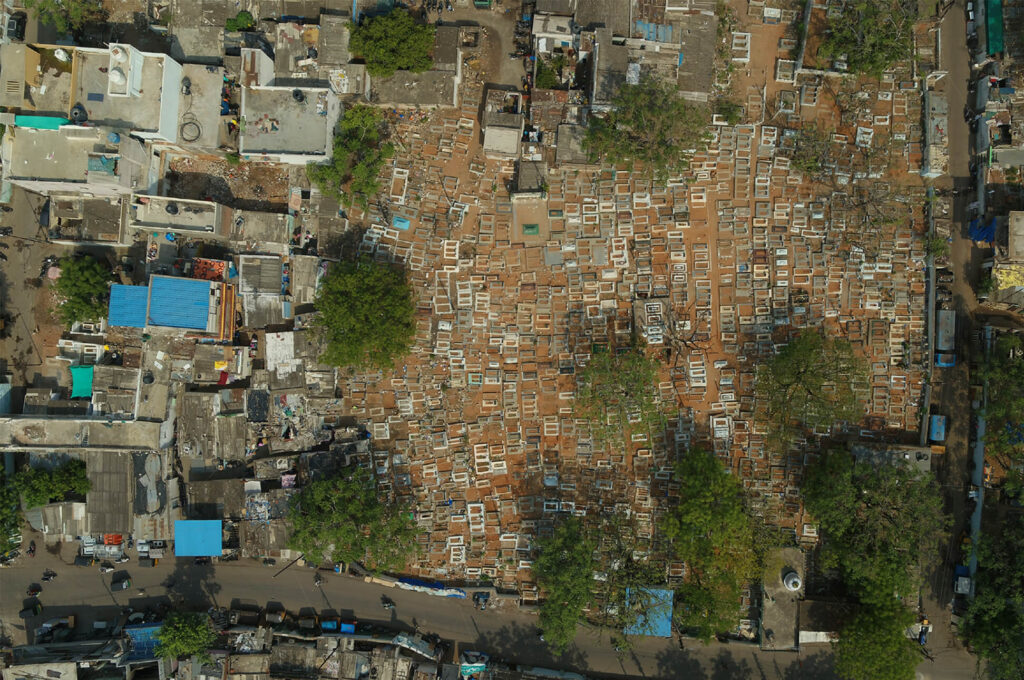
In the first impressions of the Dargah Precinct, the elements of the place came to life and role-played as characters, thus making way to this study.
The research is a compilation of experiences and documentation of precinct of a Dargah located in Hyderabad. It started as a Hyderabadi’s exploration
of her city, underpinned by an architect’s awe of experiencing simple yet intriguing ways of life and elements of the built environment that connected
Different spaces.
Curiosity led to finding one arch after another until it became many arches; some with many names, some hidden, some encroached, some filled up and some pulled down. Regular visits by the team for ‘Architecture and Dialogue’ sessions by Akarmaa Foundation and to measure draw earned us trust of the children of the settlement; while the elders held on to their reservations for quite sometime. The children would
help us with tapes, measurements and kept us company through work and rest hours.
Regular visits by the team for ‘Architecture and Dialogue’ sessions by Akarmaa Foundation and to measure draw earned us trust of the children of the settlement; while the elders held on to their reservations for quite sometime. the children would help us with tapes, measurements and kept us company through work and rest hours.
the exercise of documentation soon grew to become an exercise of mentoring the kids of the place. Bonds grew stronger as all of us started organising weekly interaction sessions under the canopy of a neem and peepal tree just by the dargah. Barriers in friendships,language and age was easily trespassed by the love for drawing within four weeks; as everyone started sharing not only stationery but also tips for drawing to make their best versions of art. We spoke to them about the value of the place and exchanged stories of the Dargah. All along, we were only able to build trust in some grown up’s of the place.
Time flew by. We spent two years and a half working at the dargah. Some people opened their doors for us,welcomed us with sheer-khoorma during Ramzan
eid, while many remained shut. But nevertheless, the Sajjada of the Dargah (descendant of the Sufi Saint) Akbar Saab and the old people residing there for
generations welcomed us and our efforts to document the place which became a great pillar of strength.