Reimagining Water Heritage
Stepwells and Landscapes
Go and do noble deeds with it. Keep digging ponds.” the King told Kooran. The king, who neither accepts the paras (mythical magical stone) nor the gold brought to him, envisioned a greater good for the people and the land. It is unknown as to this story being a fact or a folklore, but it continues to be a part of India’s history where hundreds and thousands of ponds have kept emerging persistently. This story from Anupam Mishra’s book “The Ponds are Still Relevant sets the base for many works of revival and restoration of water systems.
A Trans-disciplinary Approach
“Water links us to our neighbor in a way more profound and complex than any other.” – John Thorson
With a strong notion that water supports and connects each one of us, Akarmaa explores an open platform for people from different age groups and disciplines to colloborate and participate in a water-conscious present.
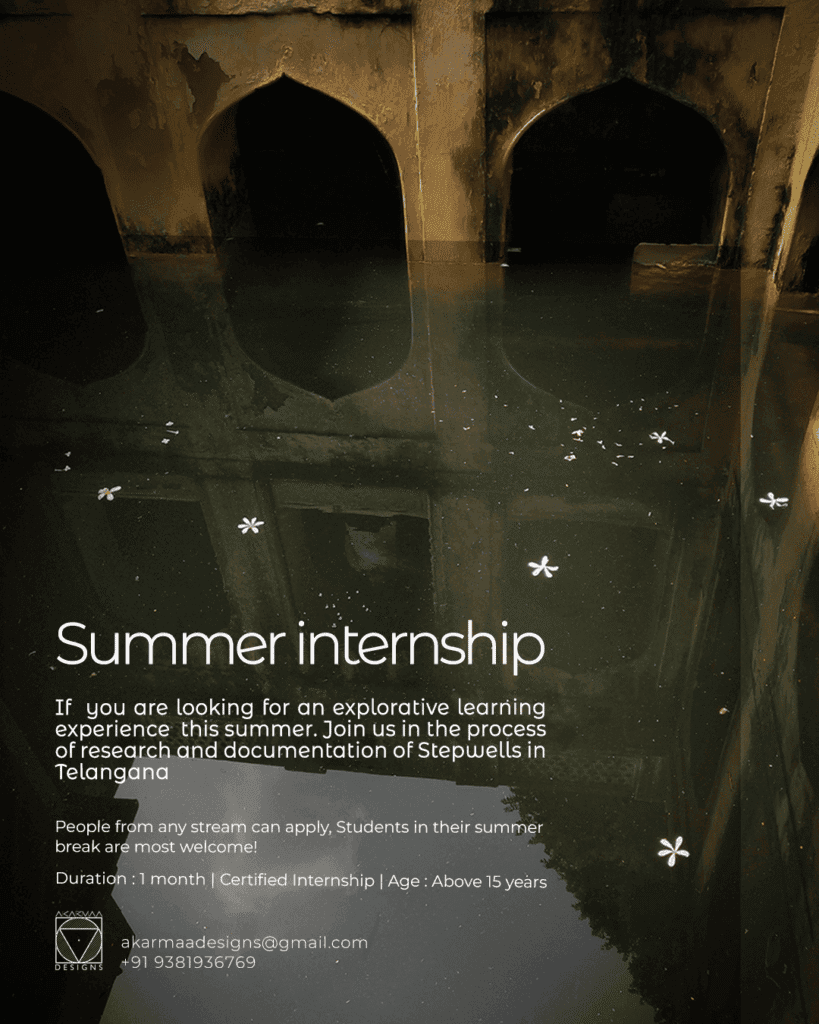
Summer Internship.
Seeking Interns for Ongoing Research and Documentation of Stepwells in Telangana. People from any stream can apply. Students are most welcome.
Preferred age: 15 years and above.
Duration of the Internship: 1 month. A certificate will be provided at the end of the internship.
There are three time slots for the internship, each starting at
May 1st to May 31st
May 15th to June 15th
June 1st to June 30th
write: akarmaadesigns@gmail.com
Call: +91 9381936769
Location.
Apply now.
An Ongoing Inquiry
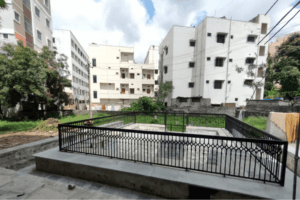
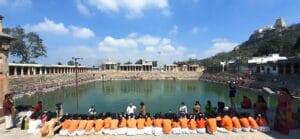
Akarmaa’s present research engages with stepwells as living systems that operate at the intersection of architecture, hydrology, material practice, and cultural memory. Rather than treating them as static heritage objects, the study approaches stepwells as evolving landscapes shaped by cycles of use, neglect, and renewal.
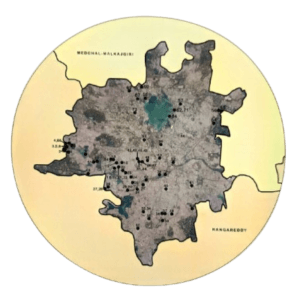
Parallel to site-specific work, the research extends to broader territorial readings, mapping exercises, archival inquiry, and community interactions contribute to reconstructing these relationships, positioning water as a structuring element of both space and culture.
The research remains iterative and open-ended, foregrounding questions rather than conclusions. How can traditional water systems inform contemporary design thinking? What forms of engagement can reactivate these sites without reducing them to artifacts, reinterpreting them within present ecological and construction contexts. Through documentation, on-site interventions, and public dissemination, this work seeks to build a layered understanding of stepwells—not only as remnants of the past, but as critical references for rethinking water, sustainability, and collective responsibility in the present.
Projects and Presentations