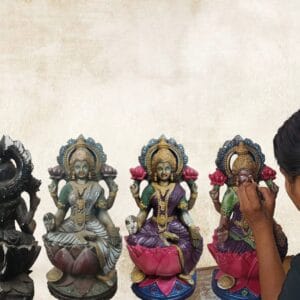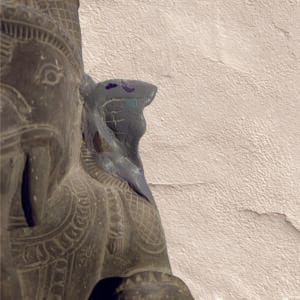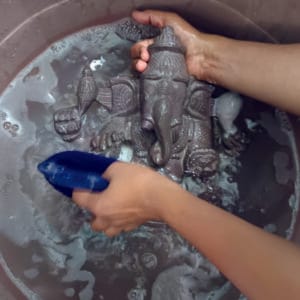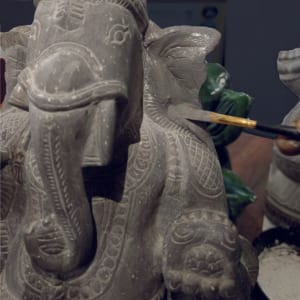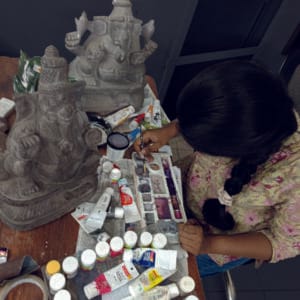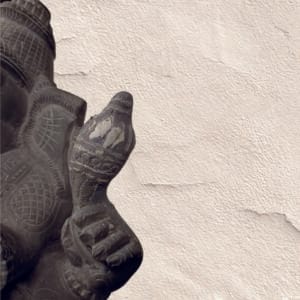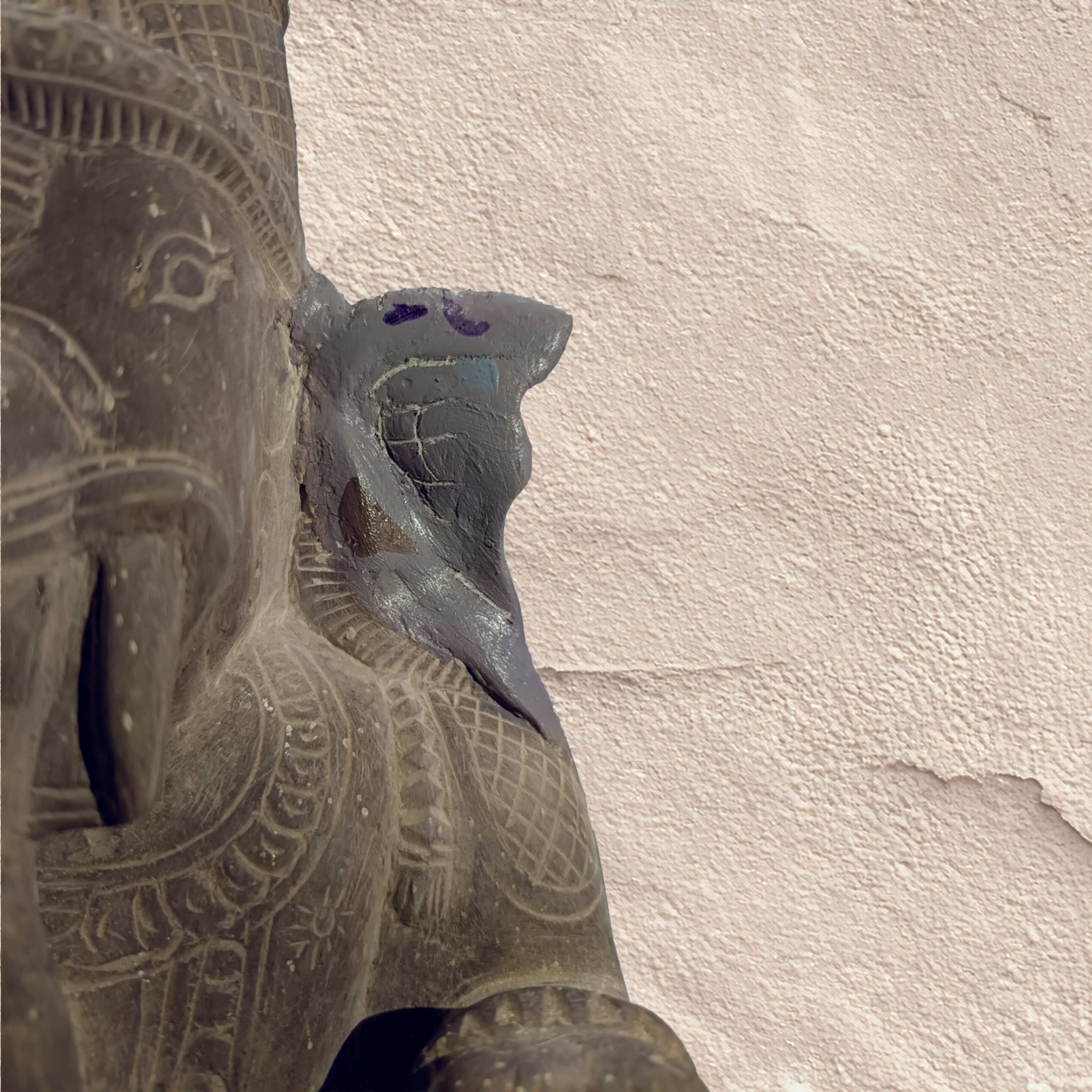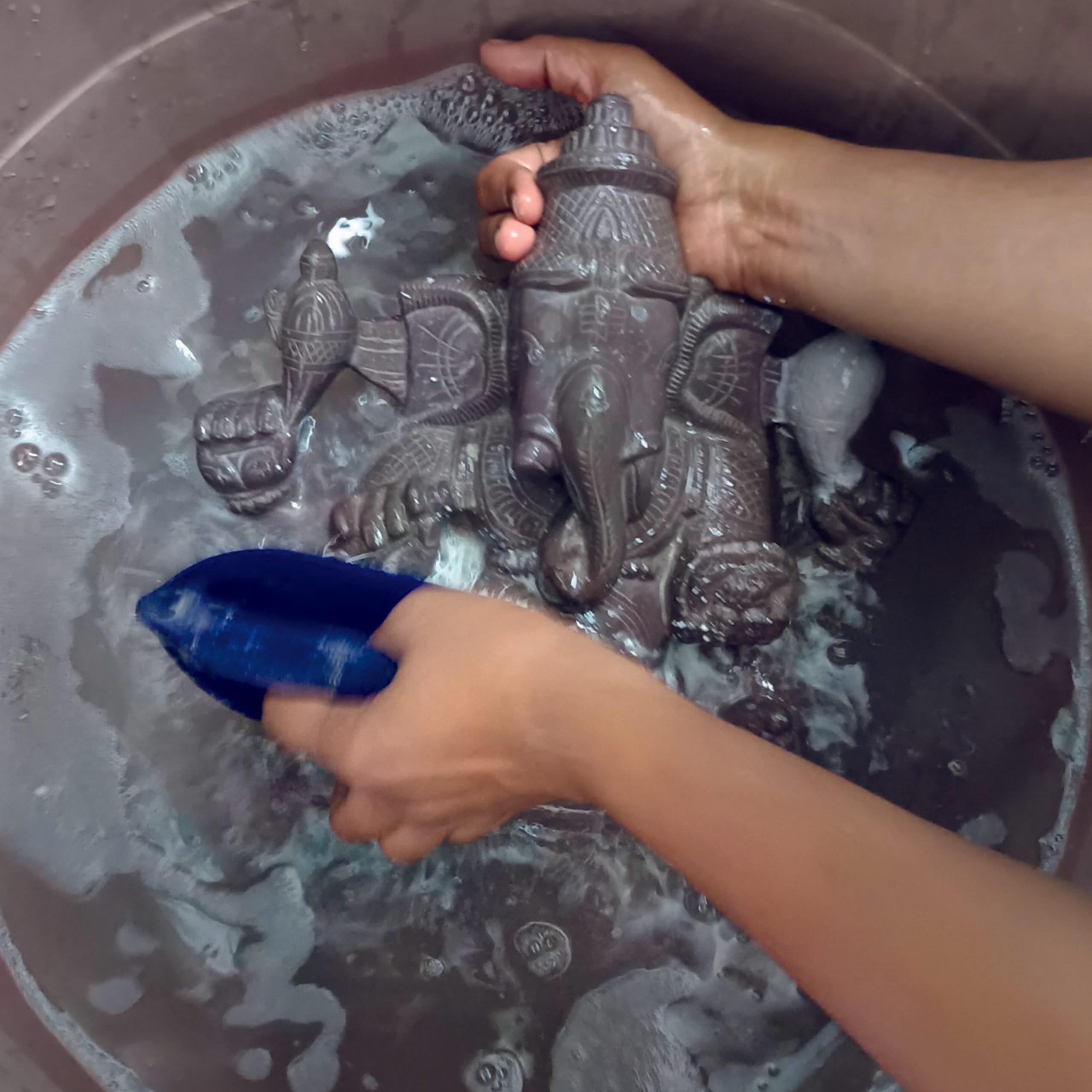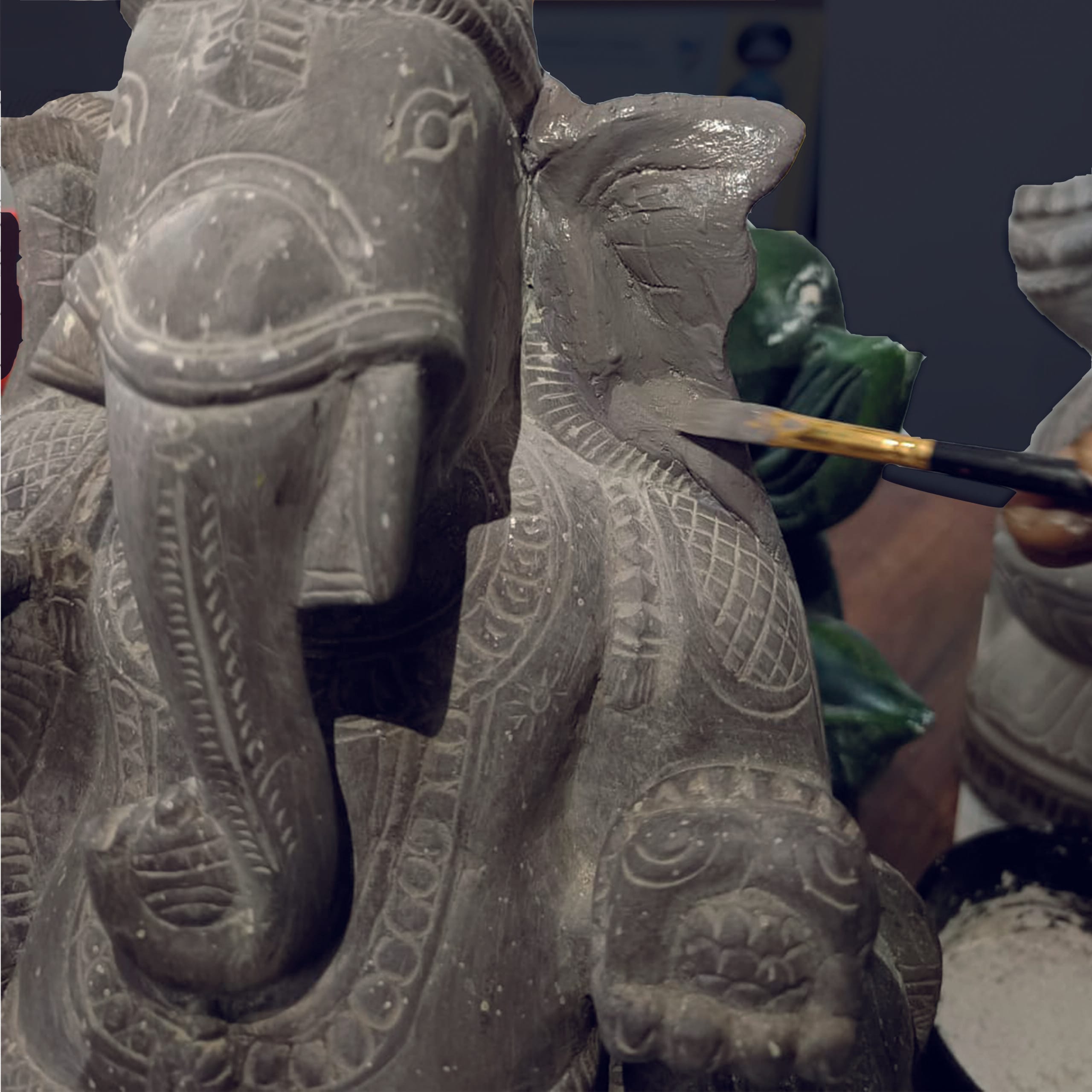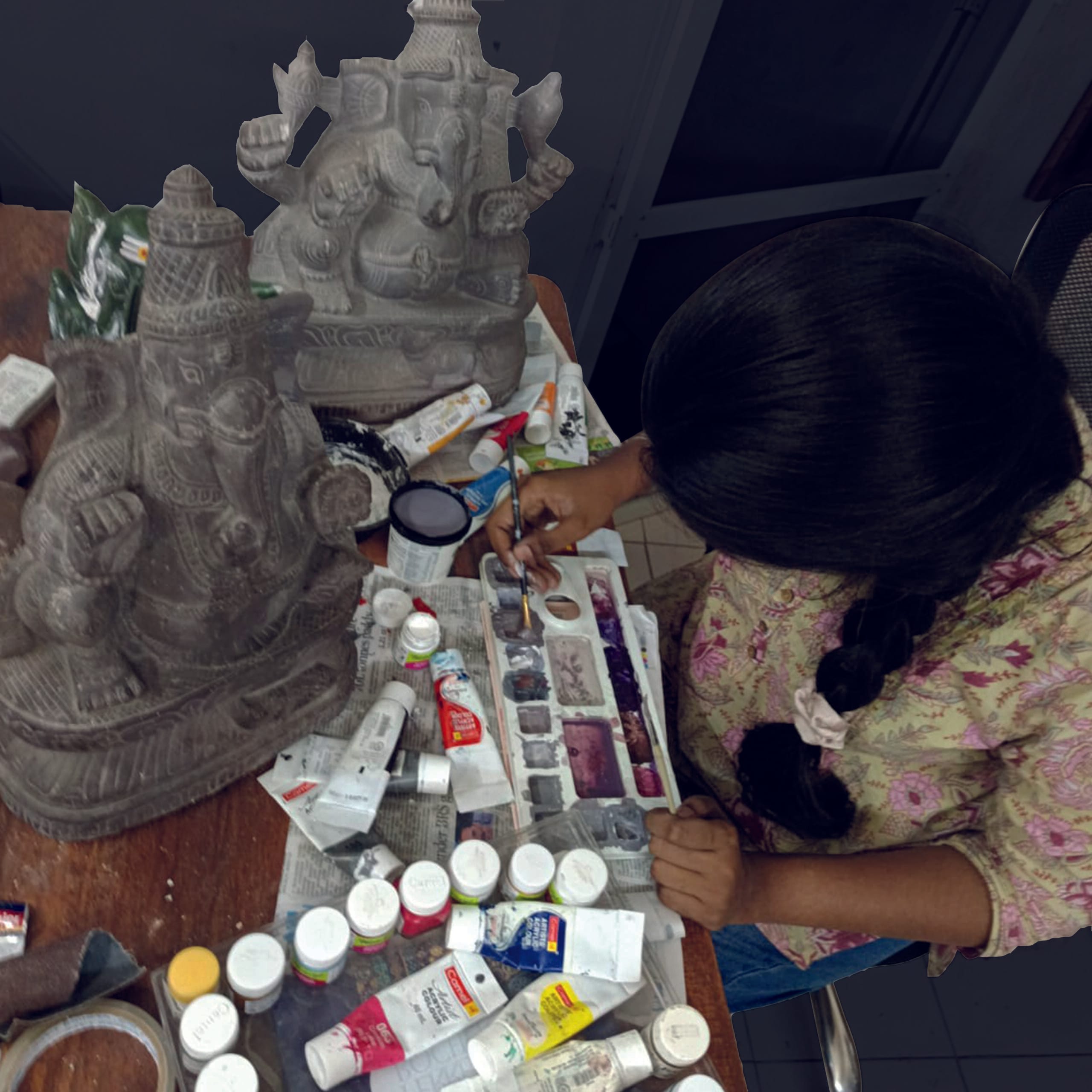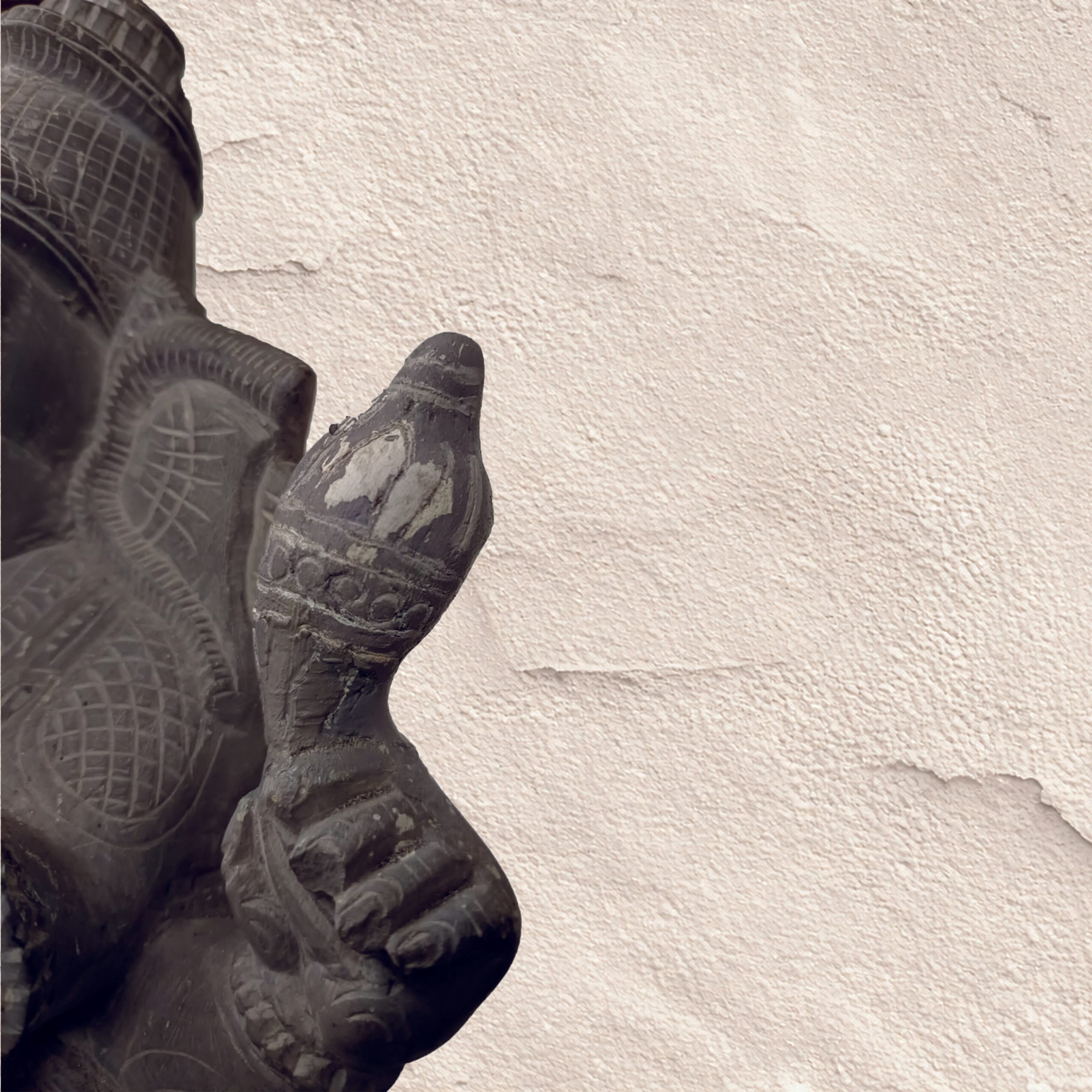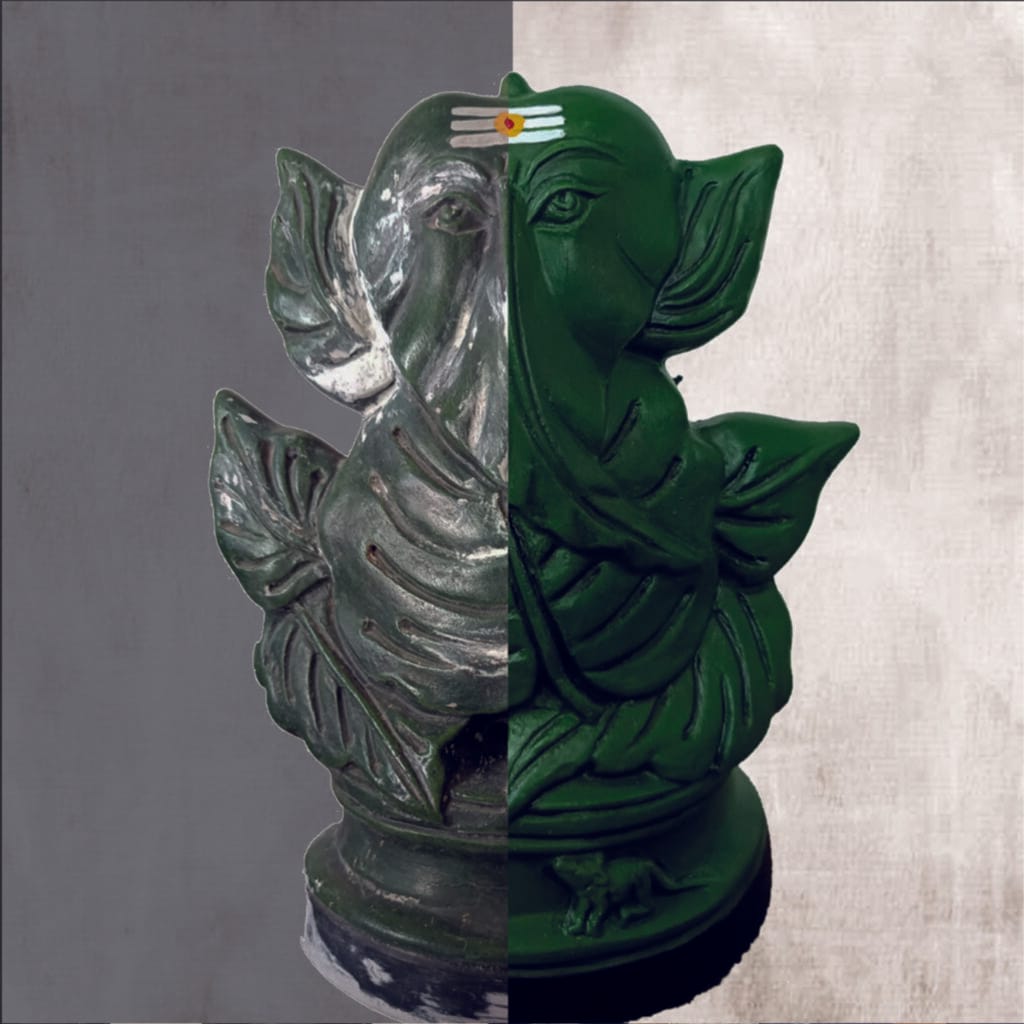
“Can you guys restore this?,” she asked, placing an idol of Ganesha made in stone in front of us. A sandstone Ganesha visited our workspace. Our client, deeply sensitive towards our collective attitude towards idols that break; “Do we discard ourselves when we lose our limbs?” we have so much technology to repair and fix ourselves, how can we treat our god differently then?” she asked. It was unconventional and interesting to want to mend idols and here we were seeing the divine in stone with some roughed-up edges. The Ganesha became a part of the studio, being always present.
The Ganesha idol sat patiently for long. Gradually a couple of more stone Ganesha’s joined the earlier one, a hundred year old idol of goddess Karmari made in plaster came by. Their increasing majority called for our attention and thence our practice of conservation required us to expand horizons.
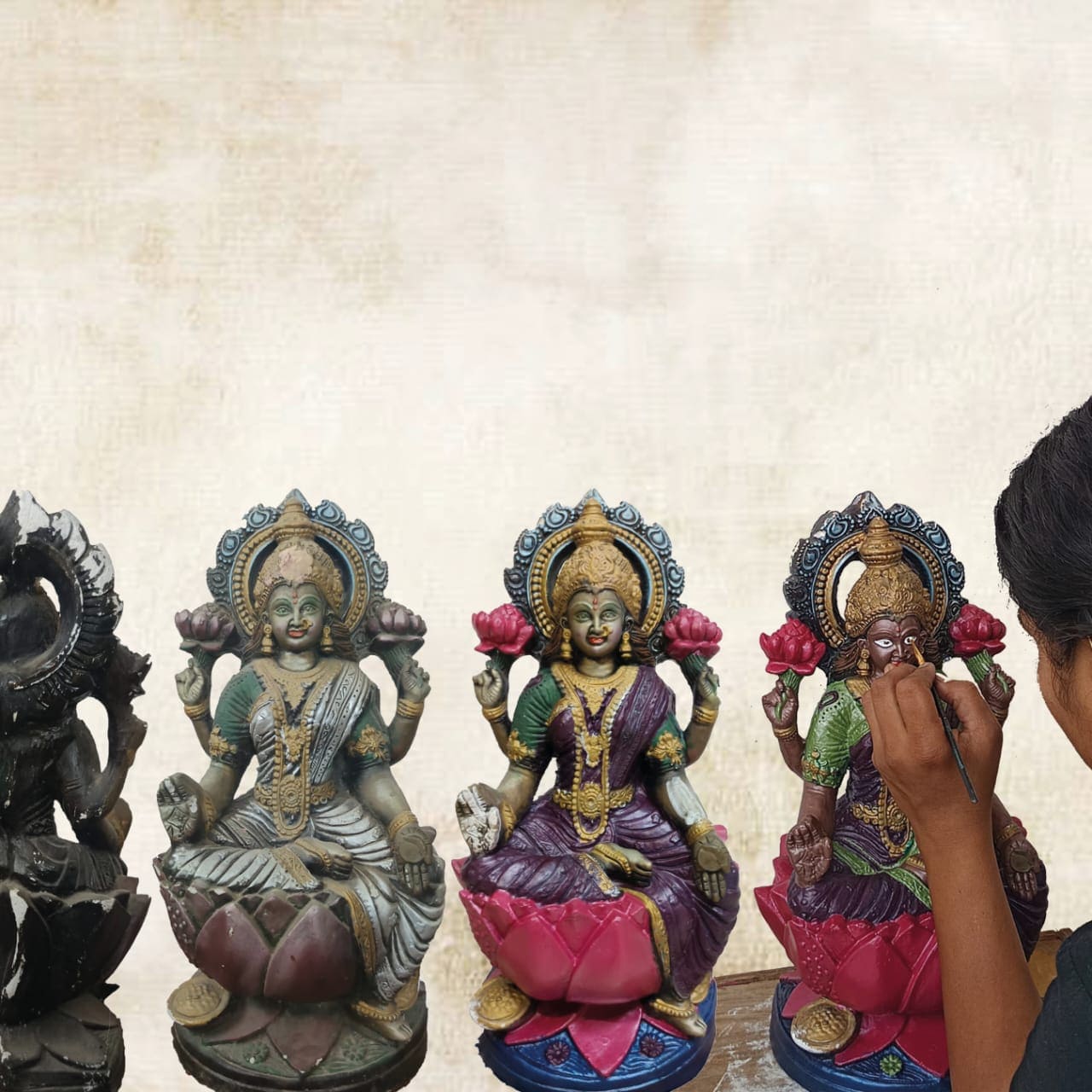
Philosophies of wabi-sabi’s view to aesthetics of use and the marks of time or simply an eastern practice of mending things, were looming around till we ‘just started’. Working with sculptures brought many new challenges and learnings. Understanding of materials was the first of all tasks; stone, plaster, paper-mache, there was a diverse mix. Mythological appropriation to the form, homogeneity of materials, their compatibility, longevity, colour tones to match, symmetry, finish and decision making were filled with many trials and eureka movements. While working on the base form required backing by research, the finish called for understanding of textures, colour in its different attributes and most fascinatingly the eyes which brought life to the divine characters, who have now found their places in different homescapes
One could bring in perspectives like mending, mindfulness and meaning or revival, restoration and sustainability to the practice and process; and all of them would be befitting. Thus adding much value to small actions to simple intentions.